Skip to content

  • Venise as suspended in time

    There are cities that constantly reinvent themselves.

    Every few months, a new neighbourhood becomes the place to be. Cafés change names, restaurants come and go, and last year’s must-visit addresses quietly fade into the background. You return feeling as though everything has changed.

    And then there is Venice.

    A city that seems to have made a different choice.

    To keep telling its own story.

    At a time when so many destinations compete to offer the newest experience, Venice moves at its own pace. Of course, it evolves. Locals talk about overtourism, rising living costs and younger generations leaving the historic centre. Yet somehow, its identity has remained untouched.

    This was my second visit.

    The first time, I left completely captivated. This time, I wanted to return to the city that had stayed with me for so long — and share it with my boys.

    Their plan was surprisingly simple: eat as much gelato as possible, compare every pizza, run up and down every bridge they could find and hop on a traghetto every time they spotted a gondola.

    Perhaps they had understood Venice better than any of us.

    A few days before our trip, a friend told me about a holiday she’d taken with her ex-husband. Every day had become a race against the clock. One museum. Two landmarks. Three recommended restaurants. A sunset they absolutely couldn’t miss. By evening, everyone was exhausted.

    I thought about that as I watched my children running from one bridge to the next.

    They had no idea where we were supposed to go afterwards.

    And they couldn’t have been happier.

    I’m not one of those people who believe famous places should be avoided. Quite the opposite.

    If Piazza San Marco attracts millions of visitors every year, it’s probably because it deserves to.

    The Basilica does too.

    I still remember the moment I looked up at its golden mosaics. Once again, beauty brought tears to my eyes. Some masterpieces impress you. Others catch you completely off guard. St Mark’s Basilica belongs to the kind you carry home long after the journey is over.

    The Doge’s Palace deserves the same admiration. Behind its Gothic façades lies far more than a palace: it was the heart of the Venetian Republic. For more than a thousand years, La Serenissima stood among the world’s greatest maritime powers. Its merchants sailed as far as Constantinople, its fleet dominated the Mediterranean and its artists helped shape the city’s influence far beyond the lagoon.

    That is also what makes Venice unlike anywhere else.

    You don’t simply visit a city.

    You walk through a story that still lives within its stones.

    A few streets are all it takes

    Beyond the Fascination

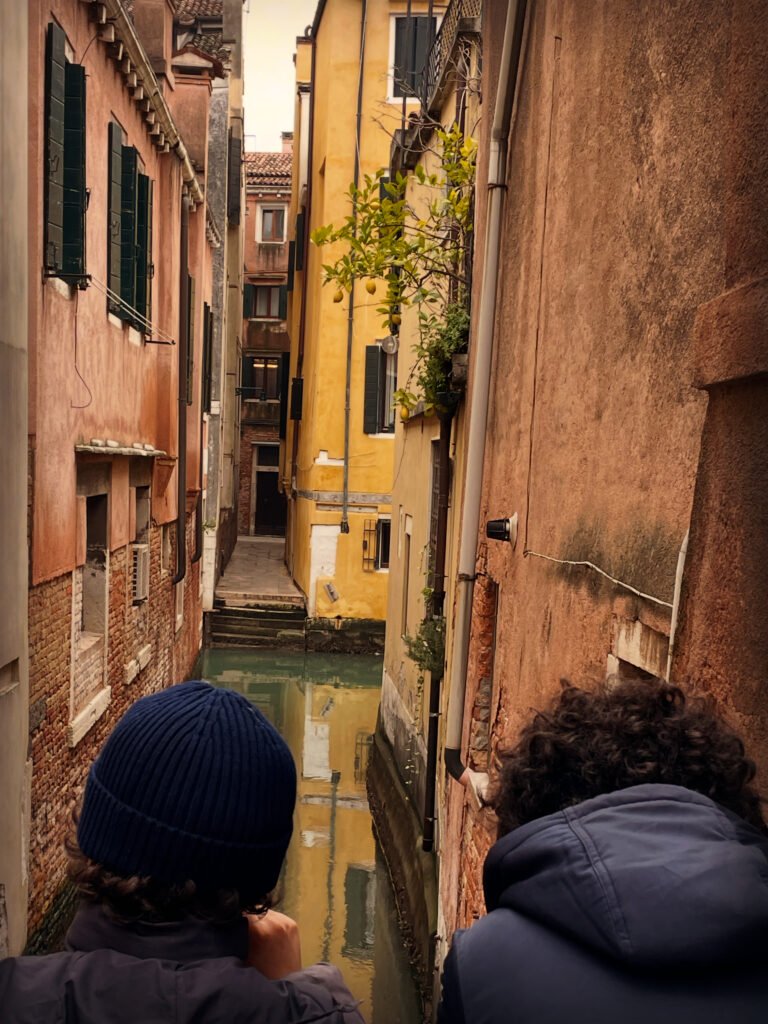
    The crowds begin to disappear almost without warning.

    At Campo Santa Maria Formosa, conversations slowly replace the sound of rolling suitcases. A little further on, Cannaregio settles back into its everyday rhythm. Children play in the squares, locals return home carrying their groceries, and visitors become noticeably fewer.

    This is where I found the Venice I had come back for.

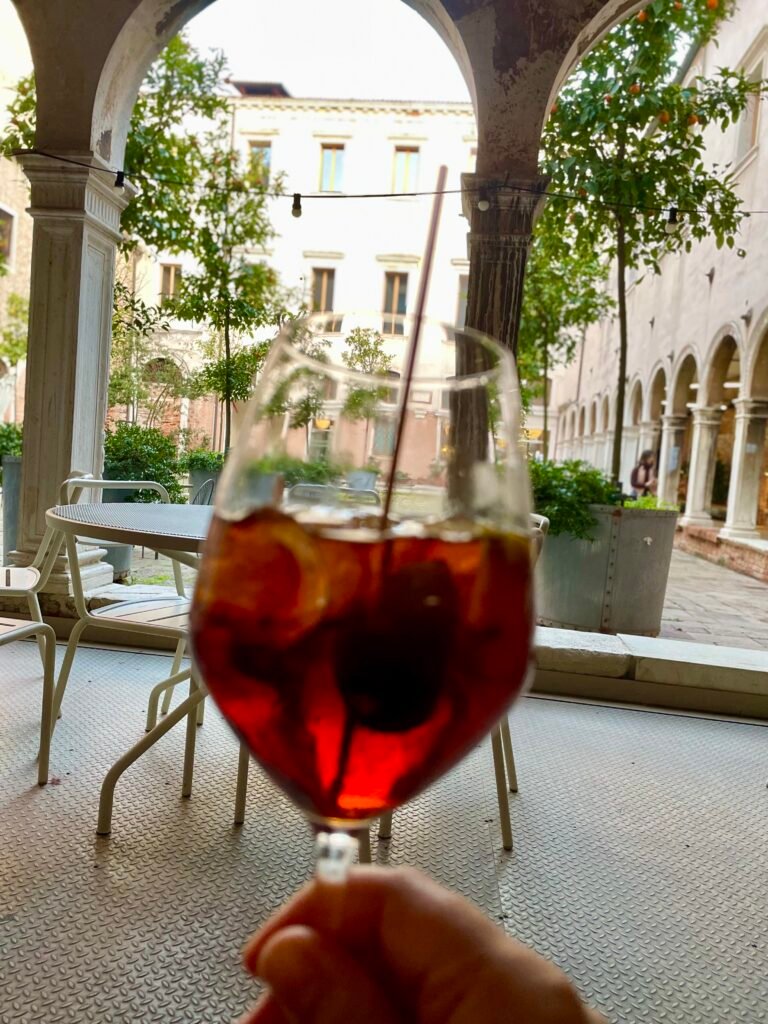
    Behind the walls of Combo Venezia, a former monastery turned hotel, café and cultural space, students work quietly beneath the cloisters while travellers read, chat over coffee or linger with a glass of wine.

    Nothing extraordinary.

    That’s precisely the point.

    I love places that don’t try to become attractions.

    They simply exist.

    Just like the city itself.

    A little further on, it’s impossible to resist Libreria Acqua Alta. Books stacked inside gondolas, cats that seem to have appointed themselves guardians of the place, staircases built from old volumes… It could easily feel theatrical. Somehow, it doesn’t. The magic remains intact.

    Towards the end of the day, we made our way to Squero di San Trovaso, one of the last traditional workshops where gondolas are still built and restored by hand. Just across the canal, at Cantinone già Schiavi, cicchetti line the counter while Venetians linger over a spritz, putting the world to rights.

    We found a place by the water.

    The boys watched the gondolas.

    I watched the boys.

    And it struck me that the memories I would treasure most from this journey might not be St Mark’s Basilica or the Doge’s Palace after all.

    But this quiet late afternoon.

    A moment when no one looked at their watch.

    Perhaps that is Venice’s greatest luxury.

    Not that it takes us back in time.

    But that, for a few precious days, it makes time itself feel slower.

    Sleeping in a Palace… or a Former Monastery

    Nani Mocenigo Palace

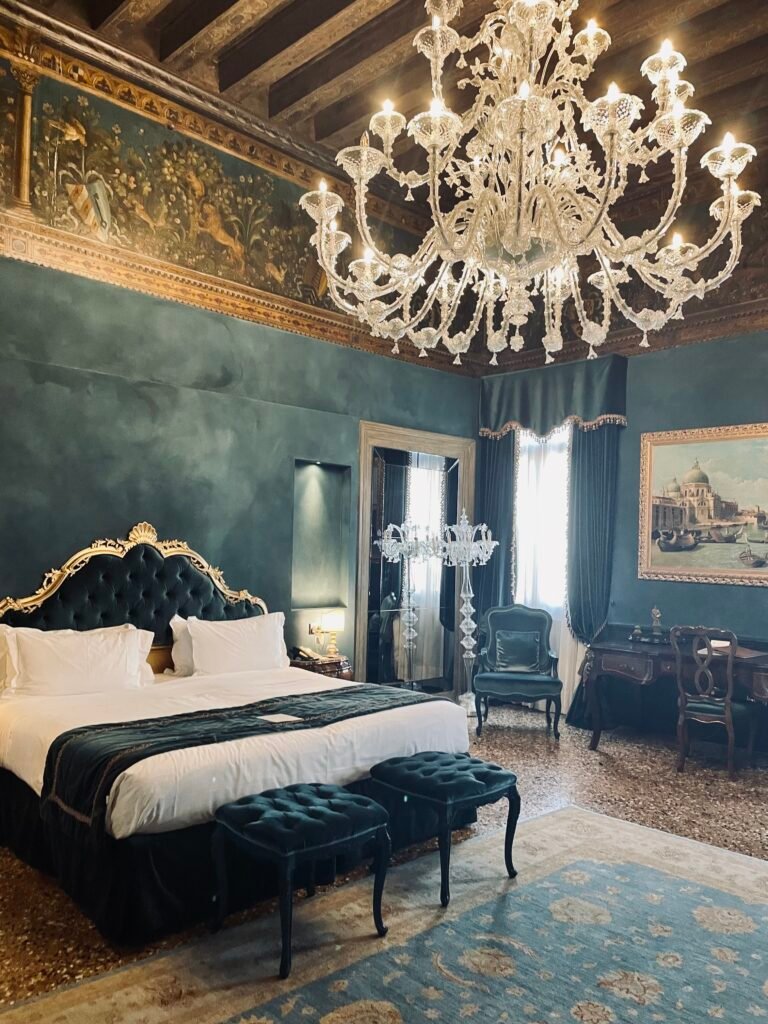
    A 16th-century palace transformed into an elegant boutique hotel. Frescoed ceilings, a peaceful inner garden, absolute tranquillity and an ideal location in Dorsoduro. A beautiful way to extend the feeling of sleeping inside Venice’s history without compromising on comfort.

    Combo Venezia

    More than a hotel, it’s a place where people gather. Set inside a beautifully restored monastery, Combo combines accommodation, a café, a restaurant and a rich cultural programme, all wrapped in understated contemporary design. Even if you’re not staying overnight, step inside the cloister.

    Ca Maria Adele

    Just a handful of rooms, refined interiors and one of the finest views of Santa Maria della Salute. An intimate address for a romantic escape.

    The Most Beautiful Culinary Stops

    Cantina Do Spade

    One of Venice’s oldest taverns. Generous cicchetti, a lively mix of locals and visitors, and an atmosphere that proves some places never need reinventing.

    Cantinone già Schiavi

    The perfect stop for a spritz and a selection of cicchetti overlooking Squero di San Trovaso.

    Osteria Anice Stellato

    Contemporary Venetian cooking that’s subtle, elegant and beautifully executed in the Cannaregio district.

    Torrefazione Cannaregio

    A proper coffee break away from the busiest squares.

    A Different Way to Wander

    Cannaregio

    The neighbourhood where Venice settles back into its everyday rhythm. Walk without a destination and simply watch the city live.

    Campo Santa Maria Formosa

    A graceful transition between Venice’s iconic landmarks and its quieter side.

    Fondamenta della Misericordia

    As evening falls, students, families and locals fill the terraces. One of the loveliest places to end the day.

    Doors Worth Pushing Open

    Libreria Acqua Alta

    A cult bookshop where books share the space with gondolas, bathtubs and a handful of particularly self-assured cats.

    Fondazione Querini Stampalia

    A historic palace where contemporary art lives alongside one of Carlo Scarpa’s most beautiful gardens. Still surprisingly overlooked.

    Scala Contarini del Bovolo

    A spiral staircase leading to one of the finest views over Venice’s rooftops.

    Worth the Detour

    Murano

    Far more than an island famous for glass. Several workshops welcome visitors, offering a chance to watch master glassblowers at work.

    Burano

    Its colourful houses may draw photographers, but the real pleasure is lingering over lunch after the crowds have left.

    Torcello

    Home to only a handful of residents, an extraordinary basilica and an atmosphere that feels almost suspended beyond time.

    20 July 2026

  • My Obsession with Linen

    I can’t remember exactly when it started. Probably with a duvet cover. Then a second one. Then a third.

    Today, I seem to own linen duvet covers in almost every color imaginable, and I’m perfectly capable of dedicating part of a trip to hunting for bed linen. I know it sounds slightly excessive. And yet, I keep doing it. I simply can’t help myself.

    I love shoes. I love handbags. I love beautiful objects, well-designed lamps, and the kind of armchairs you notice the moment you walk into a room. But if I’m being honest, very few things bring me as much satisfaction as a new linen duvet cover. As I write this, I realize that sentence may be a little concerning to some people.

    Of All Materials

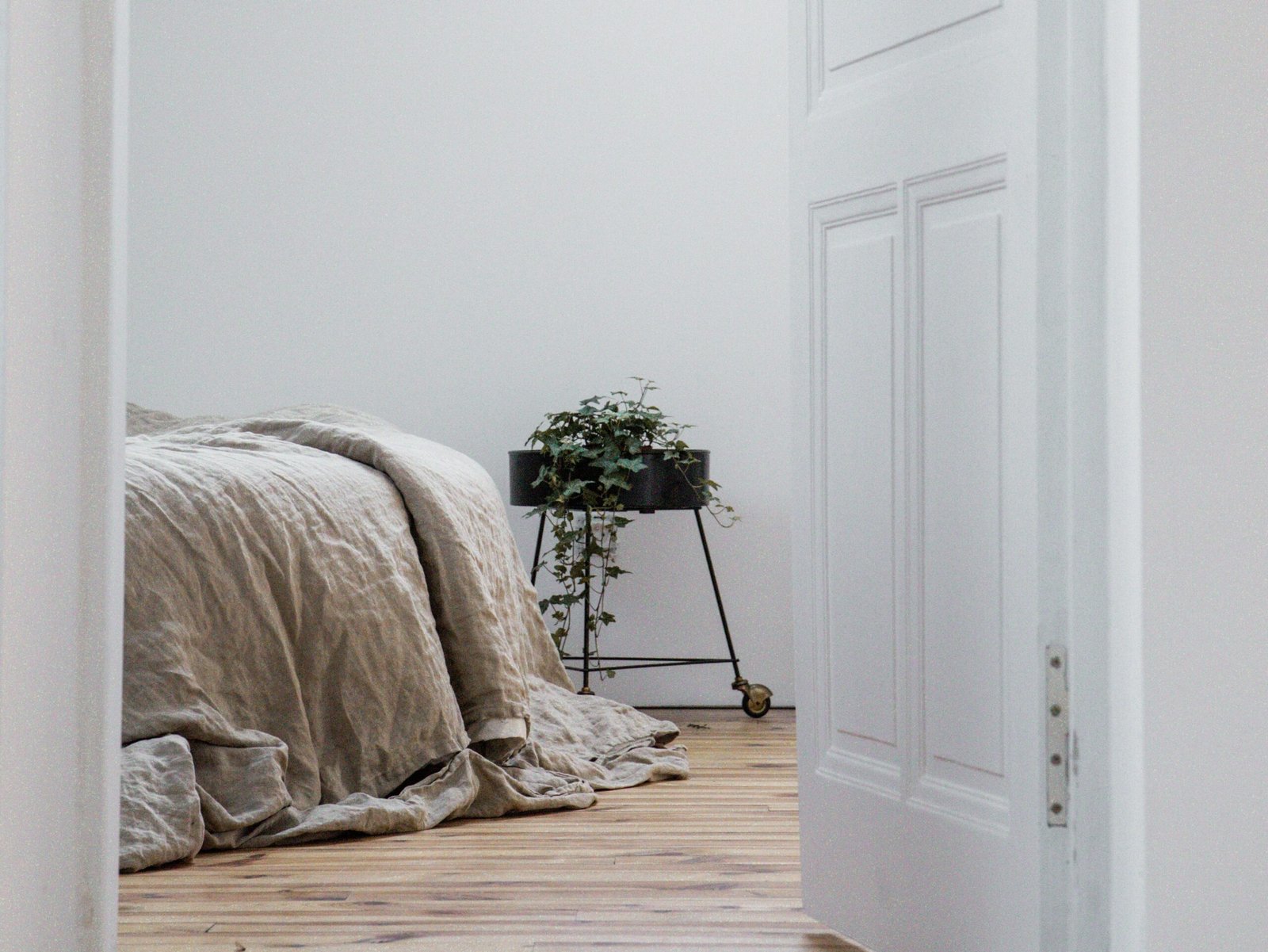
    There is something about linen that I rarely find in anything else. It manages to feel luxurious without being ostentatious, sophisticated without being formal, minimalist without feeling cold. Most importantly, it doesn’t need to be flawless to be beautiful. I think that’s what I love most about it.

    Over the years, I’ve bought linen from La Redoute, from Merci in Paris, and ok recently in Malmö. In fact, I came back from Sweden with an extra suitcase whose contents were considerably less reasonable than they should have been. In my defense, Scandinavians have a remarkable talent for making me abandon all restraint when it comes to home linens and beautifully designed objects.

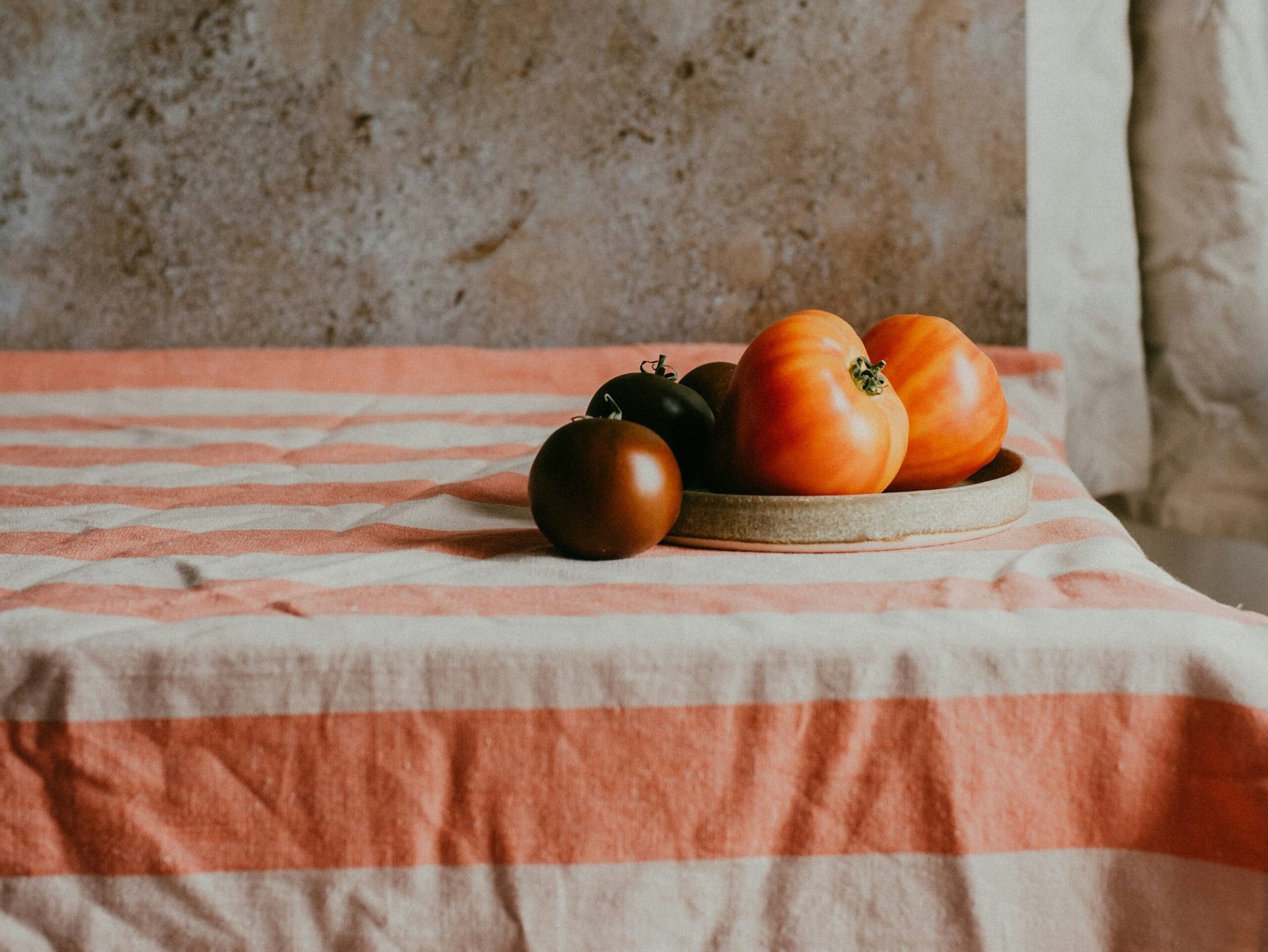
    If linen appears so often in the world’s most beautiful hotels, Mediterranean homes, and Scandinavian interiors, it’s not because it happens to be fashionable. It’s because it creates an atmosphere instantly. A bedroom feels calmer. A sofa feels more inviting. A beautifully set table feels less formal. Few materials have that power.

    Unlike many decorative purchases that lose their appeal over time, linen seems to become more interesting with age. It wrinkles, softens, and develops character. While some fabrics try to preserve their original appearance, linen often becomes more beautiful the more it is used.

    Soft Power

    In my home, it’s everywhere. On my bed, on the children’s beds, on cushions scattered throughout the house, and on a beautiful tablecloth that I bring out far less often than I should. In our holiday home, I even chose a linen sofa. I didn’t hesitate for a second.

    After years of buying it, I started wondering whether what I loved was really linen itself. Maybe it’s the way it looks. Maybe it’s the comfort. Maybe I’m simply fascinated by things that manage to be both refined and relaxed, things that don’t strive for perfection. Or perhaps I simply love the fact that linen is incapable of being perfectly smooth. Perhaps that’s why I relate to linen more than I’d care to admit.

    I could probably live without a new pair of shoes, postpone buying a handbag, or resist a decorative object. But if I come across a beautiful linen duvet cover in a color I don’t already own, I’d rather not make any promises.

    The Maison Chill Guide

    A Few Things Worth Knowing About Linen

    What exactly is linen?
    Before it becomes fabric, linen begins as a flowering plant with delicate blue blossoms. Its fibres are extracted from the stalk and transformed into yarn and fabric. France is currently the world’s leading producer of textile flax fibre.

    Why do we love it so much?
    Naturally breathable, temperature-regulating and durable, linen stays cool in summer and becomes softer with every wash. It is also one of the few materials whose wrinkles are part of its charm rather than a flaw.

    How do you choose good-quality linen?
    Look for European linen, ideally grown in France, Belgium or Lithuania. Focus on the feel rather than the weight: good linen should feel supple, alive and comfortable from the very beginning.

    Where to buy it
    The addresses below are the ones I personally use, browse regularly or keep bookmarked whenever I’m looking for beautiful home linens.

    My French favourites
    Merci (Paris)
    La Redoute Intérieurs
    Caravane

    For international delivery
    MagicLinen
    Linen Tales
    Bed Threads
    Cultiver
    Midnatt
    Himla

    How to use it
    Bed linen is the most obvious place to start, but linen works beautifully on a dining table, as cushion covers or on a sofa. Sometimes a single piece is enough to bring that relaxed elegance so many interiors strive for.

    Good to know
    If your linen feels slightly stiff when new, don’t worry. Like the best jeans or beautifully aged leather, linen improves with time and often looks even better after years of use.

    24 June 2026

  • A Cold Soup, Peaches and Barcelona

    I often wonder why certain places stay with us long after a trip is over.

    Not necessarily the most beautiful ones.

    Not the most famous.

    Not even the most spectacular.

    Just the places that come back to mind for no particular reason, months later.

    In Barcelona, for me, that place is Honest Greens.

    A healthy restaurant chain that doesn’t look like much at first glance, yet serves food that is far better than you might expect.

    The first time I walked in, it was for a juice.

    A quick break between two walks around the city.

    A convenient address just a few minutes from our Airbnb.

    Not the kind of place you circle on a map weeks before your trip.

    Not the restaurant everyone talks about.

    Not the one you book a month in advance.

    And yet, years later, I still go back whenever I’m in Barcelona and often find myself recommending it to friends planning a trip there.

    The Dish I Didn’t Expect

    During one of those lunches, I ordered a cold soup.

    I was expecting gazpacho.

    Barcelona in summer, tomatoes everywhere—it seemed like the obvious choice.

    Instead, I was served an ajo blanco.

    An Andalusian recipe made with almonds, olive oil and bread, often described as the ancestor of gazpacho.

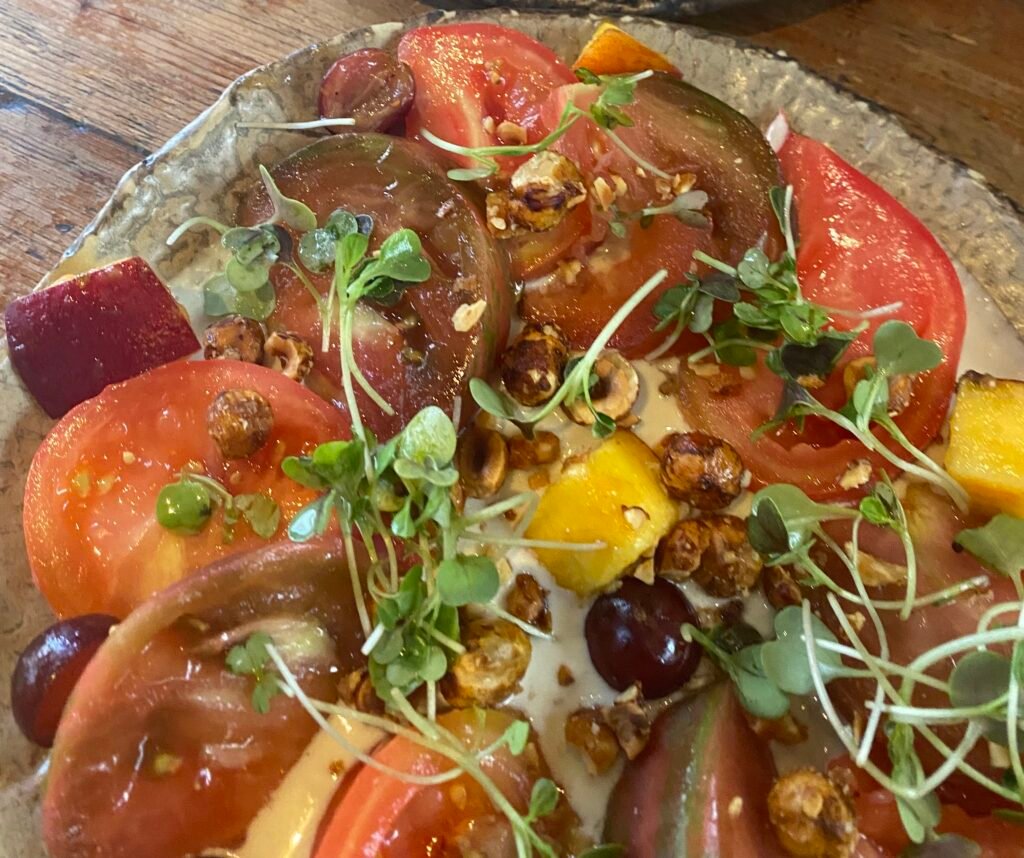
    Honest Greens’ version arrives in a large white bowl.

    At the centre is a silky, velvety soup.

    On top: thin slices of heirloom tomatoes, wedges of white peach, black grapes, a few young shoots and a generous drizzle of olive oil.

    It’s the kind of dish that immediately catches your eye.

    Simple.

    Colourful.

    Perfectly summery.

    Then comes the first spoonful.

    And suddenly, everything makes sense.

    The Elegance of Simplicity

    We often associate great cooking with complexity.

    Technique.

    Layers.

    Sophistication.

    And yet, the dishes I remember most are rarely the most complicated ones.

    This ajo blanco is a perfect example.

    The creamy sweetness of almonds.

    The freshness of tomatoes.

    The delicate perfume of peach.

    The roundness of olive oil.

    Nothing feels excessive.

    Nothing tries too hard.

    Every ingredient simply seems to be exactly where it belongs.

    And perhaps that’s what makes this dish so memorable.

    Why Honest Greens Works So Well

    Honest Greens perfectly understands the codes of its time.

    Open kitchens.

    Teams that look like a mix of young chefs and baristas.

    Large wooden tables.

    Plants everywhere.

    Colourful plates.

    Everything reflects a contemporary vision of dining: relaxed, aesthetic and product-driven.

    At any given hour, you’ll find students, creatives working on laptops, local families and travellers passing through.

    The place feels alive.

    Energetic.

    Very Barcelona, in the best possible way.

    But unlike many places that rely primarily on image, the food truly delivers on the promise.

    The vegetables taste like vegetables.

    The juices are genuinely fresh.

    The portions are generous.

    And the dishes make you want to order them again.

    And then again.

    The design draws you in.

    The food brings you back.

    The Address I Always Recommend

    Barcelona is full of more ambitious restaurants.

    More exclusive tables.

    More spectacular dining experiences.

    And yet, whenever friends ask me where to have lunch between visits, Honest Greens almost always makes my list.

    For the juices.

    For the generous plates.

    For the way it makes healthy food genuinely desirable.

    And for this ajo blanco with heirloom tomatoes and peaches, which I still make at home long after returning.

    I walked in for a juice.

    I still go back for the soup.

    The Maison Chill Version

    Ajo Blanco with Heirloom Tomatoes, White Peaches and Black Grapes

    The secret to a great ajo blanco lies as much in the quality of the almonds as in the quality of the sherry vinegar. Don’t compromise on either.

    Serves 4

    For the soup
    150 g blanched almonds
    80 g slightly stale country bread, crust removed
    1 small garlic clove
    60 ml extra virgin olive oil
    2 to 3 tablespoons sherry vinegar
    500 ml ice-cold water
    Salt

    For the topping
    2 to 3 heirloom tomatoes in different colours
    2 ripe but firm white peaches
    1 small bunch of black grapes
    A few young shoots
    A handful of toasted hazelnuts, roughly chopped
    Extra virgin olive oil
    Sea salt flakes
    Freshly ground black pepper

    Blend the almonds, bread, garlic, sherry vinegar and ice-cold water until completely smooth. Slowly drizzle in the olive oil while blending. Season with salt and chill for at least two hours.

    Pour the soup into chilled bowls. Arrange the slices of heirloom tomatoes, peach wedges, halved black grapes, young shoots and toasted hazelnuts on top. Finish with a generous drizzle of olive oil, a pinch of sea salt and a few twists of black pepper.

    19 June 2026

  • Music as refuge

    Music has always been there. Not as a backdrop, but as a presence.

    I can still see myself as a child, sitting beside my father, fascinated by a vinyl record spinning on an orange record player. That faint crackle before the sound arrived, that suspended moment, almost more important than the music itself. Even then, something was happening in the waiting, in the perception.

    Very early on, without yet being able to put it into words, I understood that music was not a single language. It was a way of inhabiting the world.

    What Comes Before

    In my family, music was never an isolated practice. It was part of life itself. Women and men sang, played, passed things on: the bendir, the flute, voices answering one another. Ancient songs, almost like those of the griots, carrying history, memory and tradition.

    I remember bodies in motion at weddings and baptisms, my grandfathers singing and dancing. Music was not something one listened to; it was something one lived. Looking back, that is probably where it all began.

    Without yet being able to articulate it, music was becoming a way of reading the world. It was what led me to music journalism before expanding into culture, then lifestyle and fashion.

    Before Naming Things

    Before I even chose, I listened.

    The voices of Oum Kalthoum, Farid El Atrache and Abdel Halim Hafez settled into the space with an almost architectural depth. Then came Georges Brassens and Jacques Brel, another way of expressing things, more direct, more embodied in words.

    And between the two, there was the music of everyday life, the music we do not choose but that passes through us anyway: on the radio, on television, in the most ordinary places.

    What Travels

    Over time, my listening expanded. Certain kinds of music have always moved me immediately, almost instinctively, as though they were speaking directly to something deeper.

    Chinese music, Brazilian music, Malian music, Italian music — especially that timeless Italian pop — Lebanese music, and of course Egyptian music. Different languages, different rhythms, yet the same ability to reach what is essential.

    And yet many of the artists who have marked me most deeply are American, often African American, because there is an intensity there, a way of transforming experience into music, that has always resonated with me.

    Thresholds

    As a child, Michael Jackson was one of those certainties. First Billie Jean, then Thriller, seen live. At that moment, music moved beyond sound to become image, movement and phenomenon.

    Later, other figures emerged: Prince, D’Angelo, Bilal, J Dilla… another kind of writing, more inward, more free.

    Physical Expression

    Music was physical, too. Hip-hop, with Grandmaster Flash, breakdancing, that way of inhabiting the body differently.

    And then there were certain energies, like AC/DC and their raw intensity, or The Police and The Beach Boys, with their immediate, almost sunlit joy.

    Later, at university, the night became another territory. House, garage and techno entered the picture, with DJs such as Laurent Garnier, and later Moodymann and Theo Parrish, carrying us through until the early hours of the morning.

    What Remains

    Jazz arrived differently, almost naturally. Miles Davis, Charlie Parker and Sarah Vaughan became an inner space, a form of balance.

    And then there was Louis Armstrong. I could not tell you when I first heard him, but his voice made an immediate impression. A warmth, a humanity, a way of conveying emotion like a caress.

    Neo soul followed with the same sense of inevitability. D’Angelo, Erykah Badu, Maxwell and their more organic, more inhabited sound remain among the artists that move me the most.

    Over time, some of the musicians I listened to became faces, then presences. Artists I was fortunate enough to meet, spend time with and sometimes count among those close to me, such as Rachid Taha, Roy Hargrove, Renée Neuville and others. What I admire in them goes beyond talent: it is their way of inhabiting music.

    Going Further

    I have always searched, listened and dug deeper.

    The names I mention are well known. But my listening was also shaped elsewhere: in more confidential scenes, lesser-known productions, places where sound is approached differently.

    Artists such as Madlib, Floating Points, Theo Parrish, Nujabes, but also Shabaka Hutchings, Yussef Dayes, Robert Glasper and Kamaal Williams.

    A more demanding kind of listening, almost a way of learning to hear differently.

    What Escapes Words

    Over time, I came to understand that what I was feeling was not only intuitive. Music truly acts upon us. It activates areas of the brain associated with emotion and memory, which explains why a song can instantly bring back an entire feeling. It influences heart rate, breathing and stress levels.

    But beyond these mechanisms, something remains elusive. Because it does not pass through language, it reaches directly what often remains inaccessible within us. A quieter place. A deeper place. Almost a spiritual one.

    Music does not tell.

    It reveals what we do not always manage to name,

    yet recognise immediately.

    5 February 2026

  • The imperfect home

    I have already argued over a mug left in the sink.

    At the time, it seemed perfectly reasonable. After all, how long does it take to put it in the dishwasher?

    And yet, with a little distance, I’ve often wondered how something so insignificant could sometimes take up so much space in a day.

    Because the mug was never really the issue.

    I like homes that breathe. I like uncluttered tables, cushions neatly arranged, fresh flowers in a vase. I’m sensitive to light, materials, and the small details that make a place pleasant to live in.

    And perhaps that’s precisely why certain little things sometimes have the power to irritate me more than they should.

    What Stands Out

    A mug left in the sink.

    A jacket draped over a chair.

    A few pairs of shoes in the hallway.

    Nothing serious.

    And yet these details sometimes have a way of capturing all of our attention.

    It’s strange how quickly we become accustomed to what is going well. A welcoming home, a pleasant day, people we love, a room filled with natural light. All of it quickly fades into the background.

    Then all it takes is one small thing out of place for our eyes to settle on it.

    As though our minds were naturally drawn to what still needs fixing rather than to what is already worth appreciating.

    The Subtle Trap of Perfection

    We live in a time when everything seems open to improvement.

    Our habits.

    Our schedules.

    Our careers.

    Our homes.

    The images we see every day show immaculate interiors, perfectly mastered routines and carefully curated lives.

    Over time, it becomes easy to believe that somewhere there is an ideal version of everyday life.

    A version in which everything is finally in its place.

    And yet, in a lived-in home, there is always something left to do: something to put away, a message to answer, an appointment to schedule, a load of laundry to start.

    For a long time, I thought calm existed on the other side of that list.

    Eventually, I realised the list never truly ends.

    A Home That Is Lived In

    A home is not a showroom.

    It is a place where days unfold, conversations linger, children pass through, projects accumulate and life occasionally leaves traces behind.

    Some deserve to be tidied away.

    Others simply deserve to be put back in their proper place in our minds.

    A mug left in the sink is not always a sign of carelessness.

    No more than a displaced cushion is a sign that something is wrong.

    Sometimes they are simply the quiet marks of a home where real life is happening.

    What Is Already There

    For a long time, I believed calm came from order.

    Today, I wonder if it comes more from the attention we choose to give things.

    Because there will always be something to tidy, fix or improve.

    We spend a great deal of time looking for what could be better.

    That is probably what helps us move forward.

    But the things that give a home its value are not always the things that can be corrected.

    More often than not, they are already there.

    When Imperfection Becomes Desirable

    For decades, interior design magazines celebrated immaculate homes: perfectly aligned cushions, uncluttered surfaces and carefully curated objects. The ideal home often looked like a place where nobody actually lived.

    In recent years, however, the opposite movement has emerged across interior design, hospitality and architecture. The most admired spaces are no longer necessarily the most perfect. They are often the ones that feel personal, lived-in and authentic.

    A table marked by time, a bookshelf filled with books, a weathered armchair or a kitchen that appears genuinely used tell a story that no amount of styling can reproduce.

    Designers sometimes refer to these spaces as lived-in interiors — homes that do not strive to be flawless, but instead reflect the lives of the people who inhabit them.

    At a time when everything seems open to optimisation, this approach offers a simple reminder: character is often born from what escapes perfection.

    5 February 2026

  • Another way to visit Dubai

    I refused to go to Dubai for a long time.
    Because of its clichés, its overwhelming image, sometimes loud, and that sulphurous reputation that seemed to leave little room for nuance, quiet elegance, or anything truly delicate.

    And then, after hearing it described the same way over and over again, I began to understand that the issue was perhaps not the city itself, but the way we look at it.
    Dubai is not only what it displays most loudly.
    It deserves to be noticed in its in-between spaces.

    In a shaded alley in Al Fahidi, when the heat begins to soften.
    In an almost empty café on a weekday morning.
    In the unexpected silence of a beach, before the city fully wakes.

    Once you stop consuming it as a spectacle, Dubai becomes deeply interesting.
    It is not a city you love immediately.
    It is a city you choose — or you don’t.


    Behind the exuberance, a softness you have to earn

    Dubai doesn’t need to be loved for what it shouts, but for what it whispers.

    In the historic district of Al Fahidi, time slows down.
    Weathered walls, quiet courtyards, narrow streets that invite you to wander without purpose.

    Along Dubai Creek, abras glide gently from one bank to the other.
    The gesture is simple, almost ordinary, and yet it tells the story of another Dubai — older, more human.

    Further west, Jumeirah offers a completely different rhythm.
    Low buildings, open air, an almost residential atmosphere.
    You walk along the sea, you stop for no reason, you let the light organise the day for you.

    It is a Dubai of everyday life, rarely shown, yet profoundly soothing.

    Slowing down in Dubai does not mean disappearing.
    It requires, on the contrary, a kind of active attention.

    You have to choose: what you cross through, what you ignore, what you truly look at.
    Dubai does not reveal itself to those seeking instant emotion.
    It speaks more to those willing to edit, not to consume less, but to consume with more intention.

    Perhaps a city known for its noise can become unexpectedly precise, almost elegant, once you stop treating it like a catalogue.
    Dubai is neither intimate nor spectacular by nature.
    It becomes fascinating when approached as a space to inhabit — temporarily, with discernment.

    This is not a destination you endure.
    It is a city you compose.

    And in that composition — between intense light, intoxicating warmth, seamless logistics, and possible escapes — Dubai reveals something rare:
    the ability to let everyone decide the level of intensity they wish to live.


    Where to stay, in the shade of the skyscrapers

    XVA Art Hotel
    A charming hotel nestled inside a restored traditional house.
    Art, calm, an inner courtyard.
    Ideal for a family looking for meaning rather than spectacle.

    Al Seef Heritage Hotel
    An elegant immersion in an older Dubai, reinterpreted with sobriety.
    Everything is walkable, the atmosphere peaceful, almost timeless.

    Jumeirah Dar Al Masyaf
    More spacious, wonderful for families.
    Greenery, canals, beach access.
    Comfort without ostentation.


    Gourmet pauses

    Orfali Bros Bistro
    Sincere, creative, warm cooking.
    A place where you feel genuinely good, even with children.

    SEVA
    A soothing, vegetarian, almost meditative space.
    Perfect for slowing down and having lunch without agitation.

    Wild & The Moon
    Simple, bright, without dogma.
    An obvious choice for healthy, quick, genuinely good meals.

    Bait Maryam
    Levantine cooking that feels warm and precise, without folklore.
    Dishes that carry a family story.


    Shopping and small indulgences

    Gold & Diamond Park
    A group of independent jewellers, away from the Gold Souk (which is worth seeing as well).
    Specialised workshops focused on bespoke pieces, with real freedom of design.

    Comptoir 102
    A concept store blending fashion, objects and café culture.
    A curated selection of discreet brands and everyday pieces.

    The Edit Dubai
    A multi-brand boutique built around a contemporary wardrobe.
    Small collections, far from logos and seasonal noise.

    Tashkeel
    A space dedicated to design and local creation.
    Objects, books and editions born from collaborations with artists and designers from the region.

    Alserkal Avenue
    A creative district set inside former warehouses.
    Galleries, bookshops and studios you can explore on foot, without a prescribed route.


    The desert and more

    The desert, in its contemplative version, early in the morning or at sunset.
    Walk, sit down, watch the landscape shift.
    The silence is striking, nourishing.

    Crossing the Creek by abra is simple and inexpensive.
    Jumeirah’s beaches during the week, barefoot, without staging.

    Here, nothing to achieve. Just to be there.


    Day trips to neighbouring cities

    And if time allows, several neighbouring cities are easily accessible.
    Simple escapes — for a day or a short night — offering other readings of the region.

    Abu Dhabi
    About an hour’s drive away, Abu Dhabi feels more cultural, more institutional.
    Museums, contemporary architecture designed for contemplation, wide calm spaces.
    A structured day, quieter than Dubai.

    Sharjah
    Even closer, Sharjah offers a different atmosphere: more rooted, more local, less staged.
    You sense more history and tradition, away from social noise.

    Oman
    If you have more time, Oman becomes an obvious extension.
    In under an hour’s flight, the landscape changes completely: mineral mountains, long roads, sober villages.
    A natural continuation for those who want something more raw, more silent.

    So many possible breaths, without weighing down the journey.

    Dubai imposes nothing.
    It lets you be.
    And that is, perhaps, exactly what we are looking for.

    Maison Chill Notes

    Skip Downtown for sleeping
    Downtown is impressive, but it can feel overwhelming quickly. For a more grounded experience, stay in neighbourhoods such as Jumeirah, Al Seef or Al Fahidi, and cross Downtown intentionally rather than by default.

    Plan a mid-day return
    Go out early, when the light is still soft and the city moves more quietly, then return to your hotel before the heat and tempo rise. This pause changes everything: you see more clearly, accumulate less fatigue, and step out again in the late afternoon with renewed energy.

    30 January 2026

Retour à l'accueil