I didn’t expect to love Stockholm quite this much in summer. I’ve travelled a lot, and some cities have fascinated me, while others have thrilled me, but Stockholm gave me something much rarer: an almost immediate sense of calm.
There is something deeply serene in the way Swedes inhabit their city. People are courteous, friendly, discreet, rarely loud or intrusive. Very little aggressive behaviour, very few everyday incivilities, and almost none of the constant noise that you eventually stop noticing in some major cities. Even when there are people everywhere, the atmosphere somehow remains remarkably gentle.
Perhaps that is what struck me most about Stockholm: this very Nordic way of simply being there, fully present, without taking up all the space.
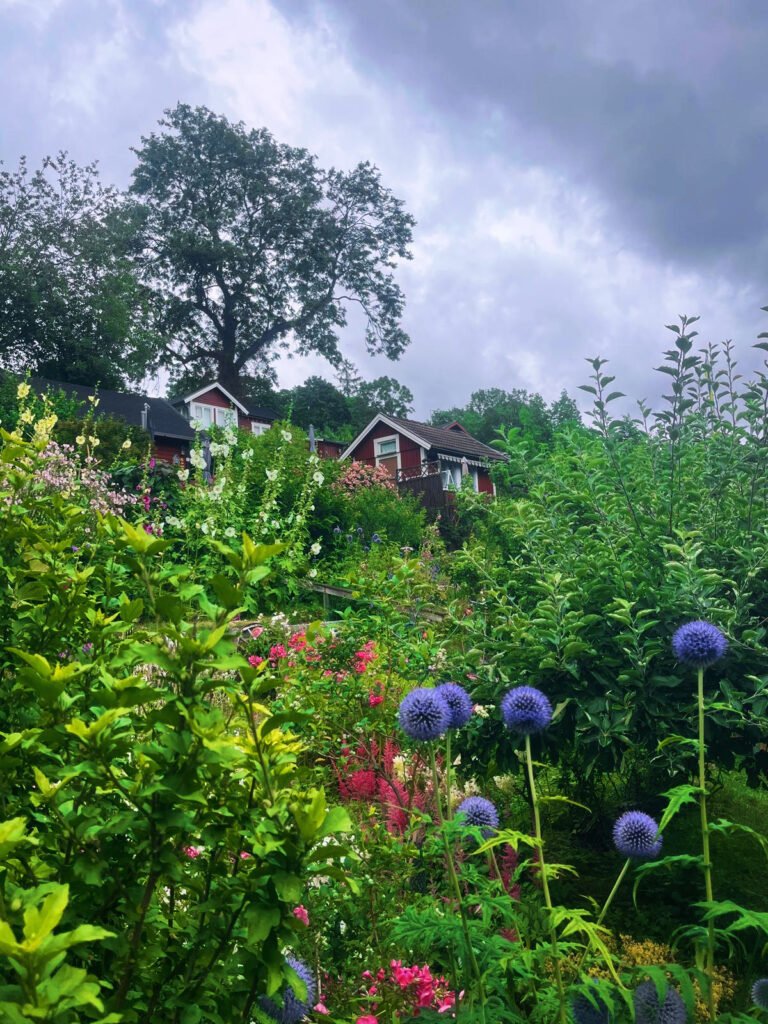
We were staying in Södermalm, on Tantogatan, in an apartment overlooking the most pleasant part of Tantolunden. The children swam on the little beach right in front of us despite the decidedly chilly water, while around them, flowers, tall trees and warm red and brown wooden houses tucked beneath the foliage created a setting I would never have expected to find in such a populated part of Stockholm.
In the evening, people were still out enjoying the neighbourhood. There was a mini-golf championship, Scandinavian dance and music classes, squirrels, rabbits running through the grass, and ducks with their ducklings wandering among the visitors without the slightest concern. It was probably this very visible connection with nature, with its gardens, flowers and almost bucolic side, that surprised me most.
We walked an enormous amount during our stay. Our step-counting app probably had its best week of the year, but Stockholm is so easy to explore on foot that it would have been a shame to do otherwise. You move from one island to another, cross a bridge, follow the water and suddenly find yourself in a completely different setting.
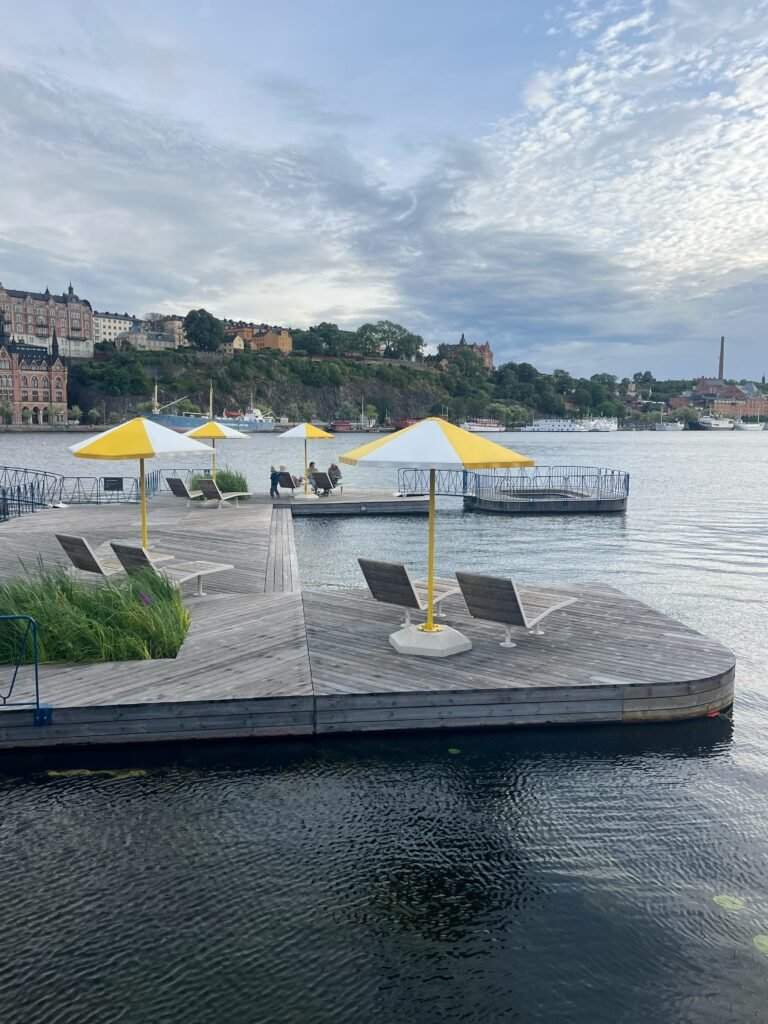
And when your legs start protesting, the enormous benches that look almost like loungers are the perfect excuse to stop. Some breaks can even end with a swim, since Stockholm offers plenty of opportunities for bathing, as well as unexpected swimming spots right in the city.
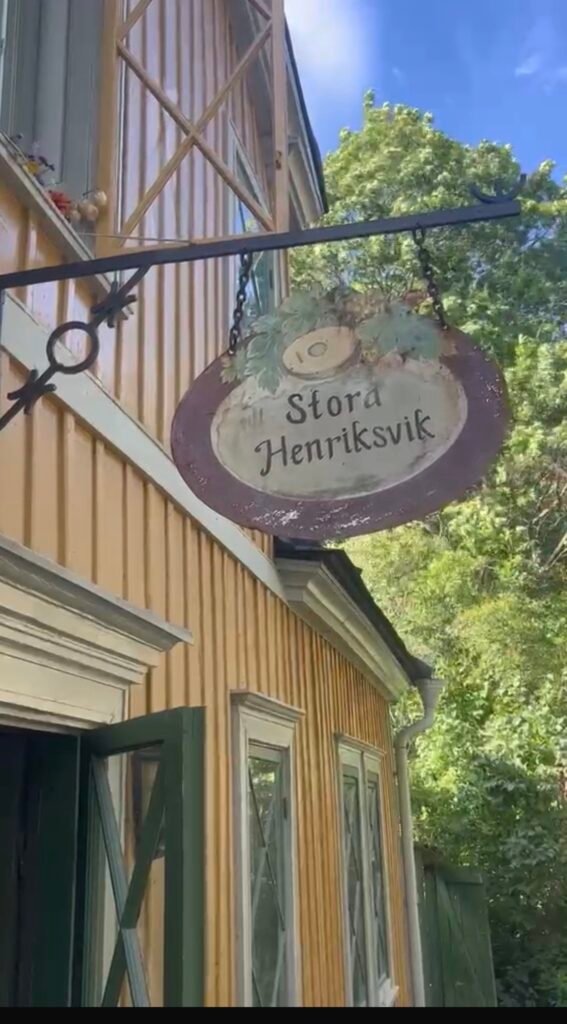
From Södermalm, we made our way to Långholmen, a very green little island known for its paths, beaches and waterfront walks. I particularly loved Stora Henriksvik, a café-restaurant set in an old house surrounded by a garden, where you can have lunch or a coffee before continuing your walk.
We also had two other parts of Södermalm that we particularly enjoyed crossing before heading towards Gamla Stan: SoFo and Mariatorget. South of Folkungagatan, SoFo is packed with small fashion, design, vintage and homeware shops, cafés and galleries. Around Mariatorget and Hornsgatan, the atmosphere is slightly different, with more independent shops, second-hand stores and little places worth discovering.
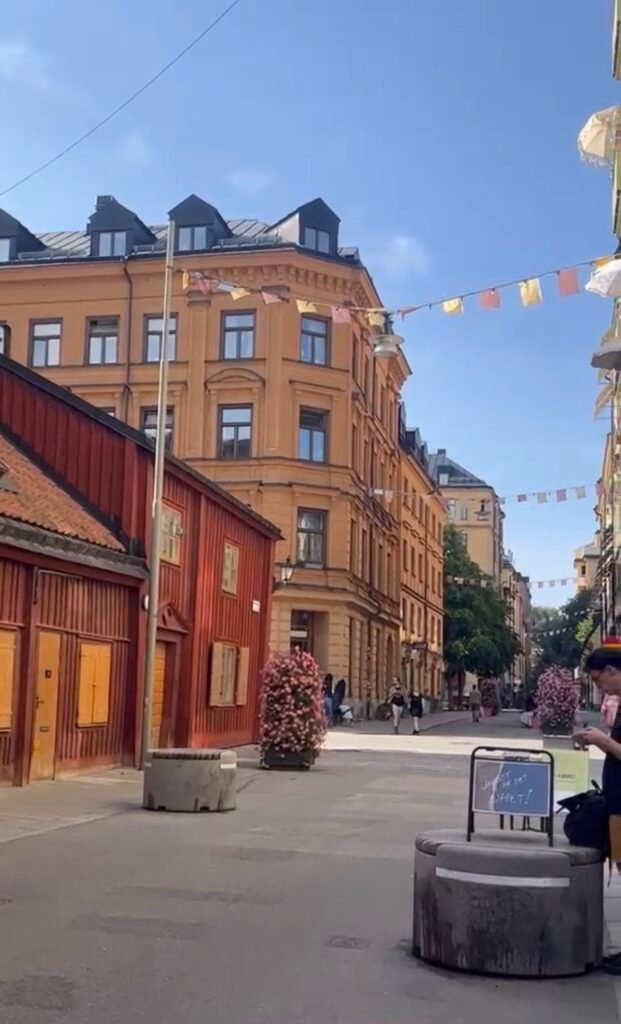
I loved wandering around, stepping into shops without necessarily looking for anything, then continuing on foot towards Gamla Stan. It became a kind of ritual: Södermalm, a little shopping, then the old town.
Gamla Stan, away from the postcards
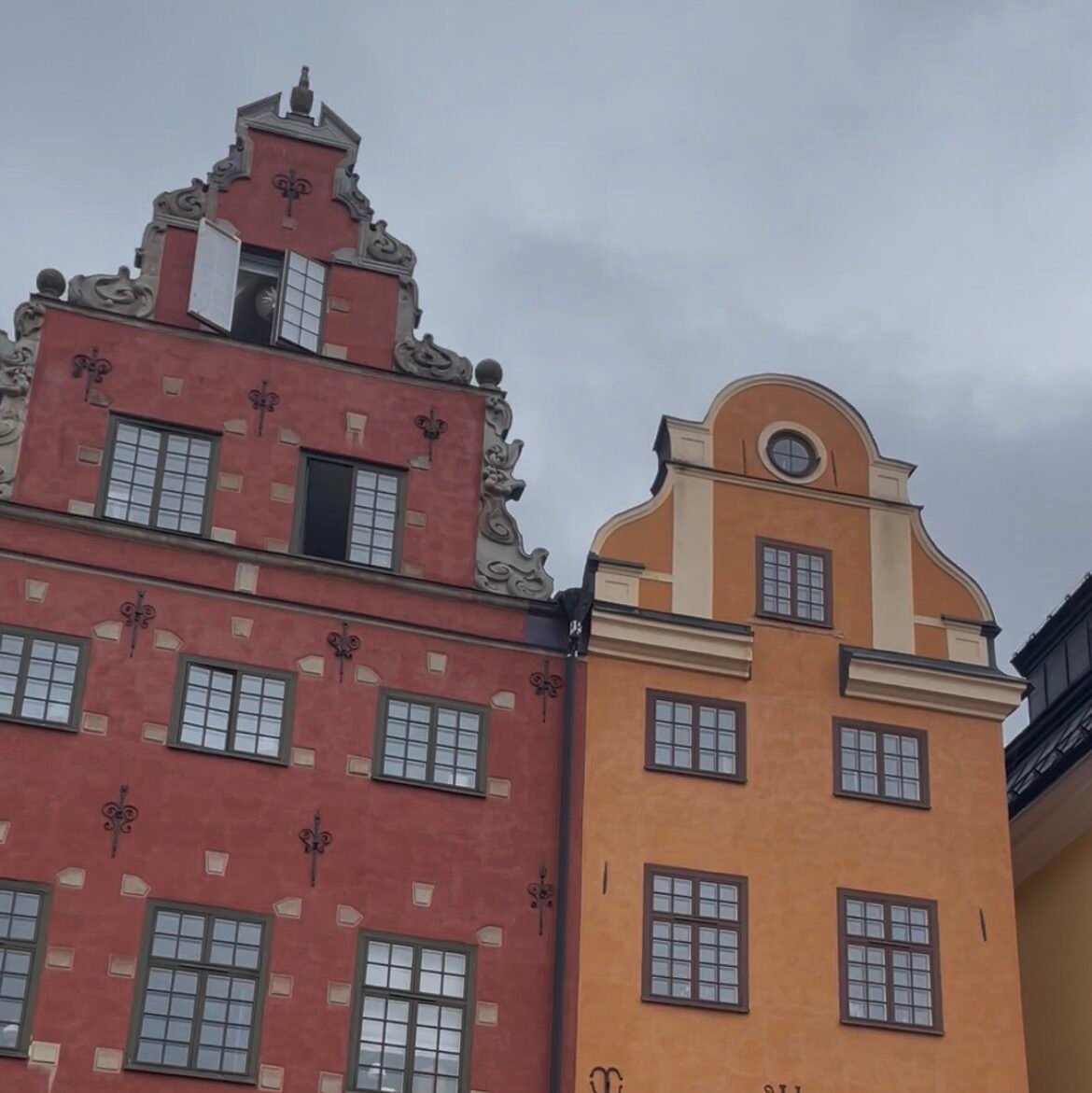
We obviously explored Gamla Stan, Stockholm’s old town, with its narrow streets, colourful façades and historic buildings. We crossed Stortorget, looked around the Royal Palace, then continued along Österlånggatan, Prästgatan, Trångsund and Mårten Trotzigs gränd, one of the narrowest streets in the city.
I particularly enjoyed moving away from the busiest streets and paying attention to the details of the façades and the little perspectives that appear around a corner.
There was, however, one rather unexpected presence in almost every shop window: Pippi Longstocking, or Pippi Långstrump in Swedish, the famous red-haired girl with plaits created by Astrid Lindgren. The children certainly weren’t expecting to see her absolutely everywhere and were initially rather frightened by her. Which, naturally, made us laugh.
We also visited the Nobel Prize Museum, located on Stortorget in the former Stock Exchange building. The museum tells the story of the Nobel Prizes and presents the lives, ideas and discoveries of their laureates.
At Slussen, the major junction between Södermalm and Gamla Stan, we discovered another very Stockholm scene: Nystekt Stromming, a little food truck serving herring, recognisable by the enormous fish mounted on its roof. It was clearly a genuine lunchtime stop for local Swedes, who would stop there for lunch before carrying on with their day.
We tried it and, somewhat unexpectedly, all thought it was really good, except my husband, who doesn’t particularly like fish and likes smoked fish even less. He therefore did not quite share our enthusiasm.
For a little elevation, Katarinahissen, the historic lift overlooking Slussen, offers beautiful views over Gamla Stan and the islands of Stockholm. From Riddarholmen, another lovely viewpoint, the old town looks completely different from the waterfront.
Fotografiska, the contemporary photography museum housed in the former customs building at Stadsgården, was another place I particularly wanted to visit. The exhibitions are obviously the reason to go, but I loved looking back out at the city and its landscapes from inside.
Djurgården, from the Vasa to the Rosendal greenhouses
On Djurgården, the island home to several of Stockholm’s major museums, we visited the Vasa Museum, dedicated to the spectacular 17th-century warship that spent 333 years at the bottom of the sea.
I love boats, and I’ve always been fascinated by maritime history, particularly the Viking world. The Vasa was therefore one of the museums I was most looking forward to.
The ship sank in 1628 on its maiden voyage and was raised in 1961. Its sheer size is impressive, but it was the sculptures, ornaments and extraordinary amount of preserved detail that fascinated me most.
A few minutes away, the Nordiska Museet, the museum dedicated to Nordic culture and everyday life, offers another way of discovering Sweden through its objects, traditions and ways of life.
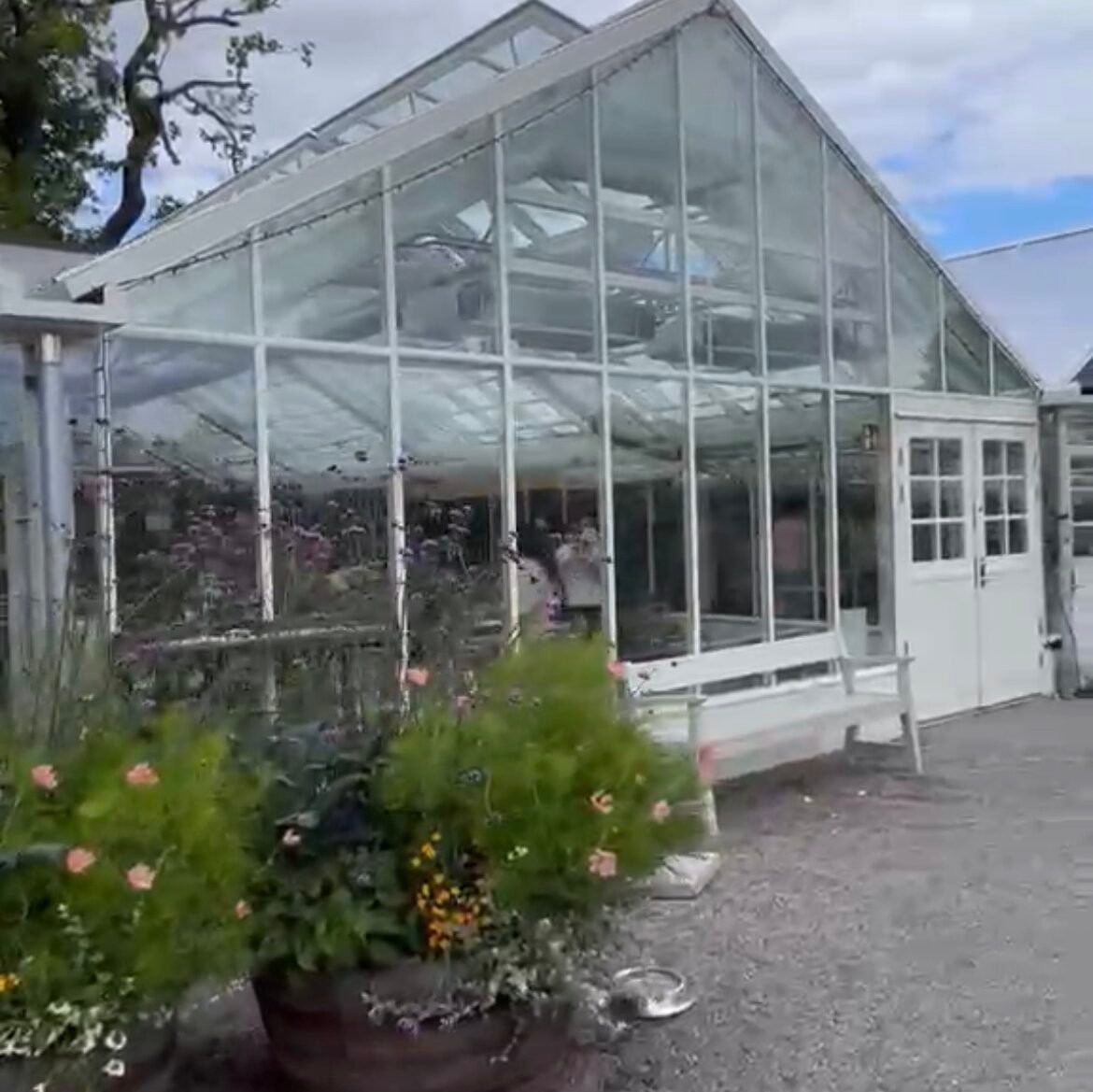
But my real favourite on Djurgården was Rosendals Trädgård, a horticultural garden with crops, orchards and beautiful greenhouses where you can also eat and have a coffee. I loved it so much that I could easily have stayed there for the rest of the day.
And I even met a few particularly greedy regulars: pretty little tits came to peck around us. They are so accustomed to visitors that they are hardly wild anymore and seem to have worked out perfectly well that Rosendals is an excellent place to find lunch.
Fika, and especially Schweizer
Of course, we had to experience fika, the Swedish ritual of taking a break over coffee and something sweet. I had noted Café Pascal, Coffee Gallery and Fosch Artisan Pâtisserie, as well as several bakeries including Tössebageriet, Stora Bageriet, Valhallabageriet, Fabrique and Frost Bageri.
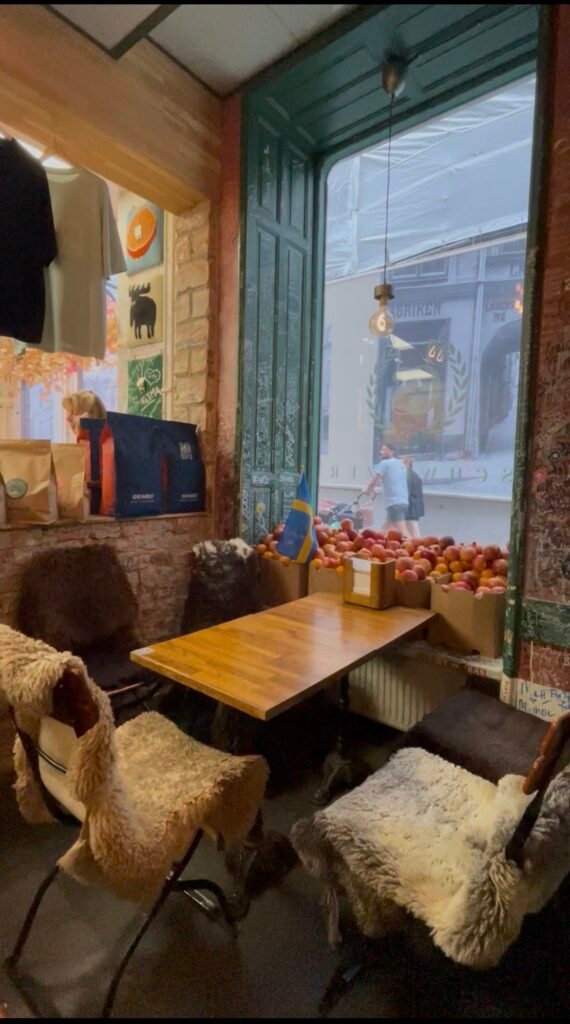
But there is one address that deserves a special mention: Schweizer, a pastry café on the very touristy Västerlånggatan in the heart of Gamla Stan.
At first glance, you could easily mistake it for a tourist trap. It sits on one of the busiest streets in the old town, and its décor is quite far removed from the pared-back aesthetic usually associated with Scandinavian coffee shops.
And yet, please, don’t walk past.
It is beautiful, warm and almost timeless, with crates overflowing with oranges and fruit that are very much part of the setting. You walk in out of curiosity and quickly understand why the place works so well.
And then there are their cinnamon buns.
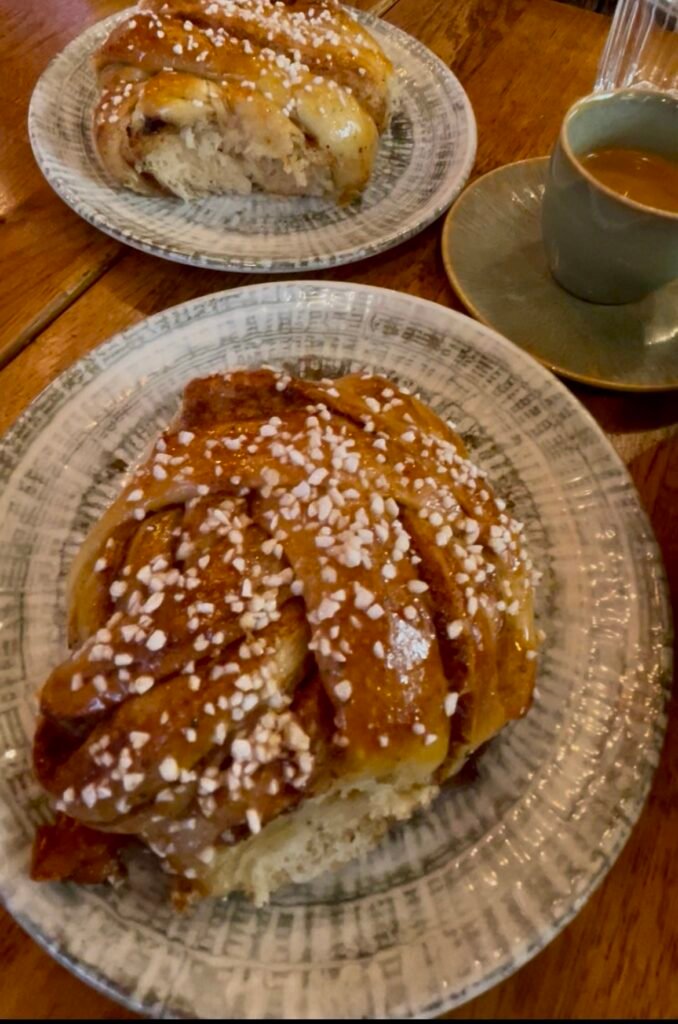
I’ve eaten them in a lot of countries. Really, a lot.
They are the best I have ever tasted.
I realise that is quite a serious statement to make about a cinnamon bun, but I stand by it.
Östermalm, between design and fashion
In Östermalm, my ideal route begins at Östermalms Saluhall, the district’s magnificent historic food hall, before moving on to Svenskt Tenn, Nordiska Galleriet, Asplund and Nitty Gritty, with a coffee break on Nybrogatan and a walk towards Strandvägen.
Svenskt Tenn, the iconic Swedish interiors house, is an obvious stop for textiles, patterns, furniture and the world of Josef Frank. Nordiska Galleriet, a reference for Scandinavian and international design, offers a more contemporary selection, while Asplund continues the exploration of Swedish furniture and objects.
With Nitty Gritty, we naturally move into fashion.
Then comes a pause on Nybrogatan, followed by Strandvägen, with its magnificent façades and waterfront promenade.
Around Biblioteksgatan and Birger Jarlsgatan, there is no shortage of fashion addresses: Acne Studios, Byredo, A Day’s March, Nudie Jeans, ARKET, Totême and Filippa K, as well as maxjenny!, Maruschka De Margó and much more.
For design and objects, I loved Skultuna and especially Brandstationen, a concept store housed in a former fire station, filled with furniture, lighting, ceramics and vintage pieces.
I also found the more accessible shops particularly interesting. H&M Home felt much chicer and more considered than elsewhere, with real attention paid to materials and combinations. And Designtorget, the Swedish design and everyday-object retailer, offers a selection of designers that makes it very easy to leave with something.
In my case, it was a set of little Swedish egg cups featuring different popular Swedish characters, including the hippopotamus.
I absolutely did not need them.
Naturally, I bought them.
A little linen story
I mostly brought back from Stockholm what I always seem to end up falling for: home textiles. This time, a beautiful khaki-green pure cotton duvet cover and two decorative linen cushion covers, of course, found their way into my suitcase.
A little nod to my article about linen.
For contemporary art, Wetterling Gallery and Galleri Duerr were among the addresses I wanted to discover. And then there is Thielska Galleriet, a museum housed in a villa by the water, where the house and its surroundings are almost as much a part of the experience as the artworks themselves.
Stockholm will ultimately have left me with far more than I expected: the feeling that, for a few weeks, I had been perfectly happy somewhere.
Where to stay
Ett Hem
A private house transformed into a hotel, with interiors by Ilse Crawford and a distinctly residential atmosphere. A discreet address for experiencing Stockholm differently.
Hotel Frantz
Set in a historic building in Södermalm, a good base for exploring the neighbourhood on foot and easily reaching Gamla Stan.
Långholmen Hotell & Prison Museum
Sleeping in a former prison is already quite an experience. On the leafy island of Långholmen, former cells have been converted into rooms, while the old prison also houses a museum dedicated to its history. The prison closed in 1975.
The best food stops
BAMBi
A small Södermalm restaurant that has become a sought-after address for its inventive cooking and relaxed atmosphere. A good reason to stay in the neighbourhood for dinner.
Babette
In Vasastan, a little place that appears unpretentious but draws people in for its wood-fired pizzas, sharing plates and excellent wine selection.
Solen
In the new Slakthusområdet district, a contemporary restaurant centred around fire, with a cuisine that travels well beyond traditional Swedish classics. The industrial setting is part of the experience.
Triton
A much more discreet address in Södermalm, with ambitious cooking and an almost home-like atmosphere. The kind of restaurant you would rather discover than simply tick off.
SNÖ
In Vasastan, this family-run gelateria makes small batches of artisan ice cream, with classic flavours alongside much more unexpected combinations. A good reason to make the detour for something sweet.
A different way to wander
Vasastan
A more residential Stockholm, with a lively café and restaurant scene and plenty of independent little addresses. Less immediately spectacular than Gamla Stan, but much more interesting when you want to see how the city actually lives.
Kungsholmen
For walking by the water, changing pace and discovering a more local side of Stockholm. The island lets you leave the obvious routes without really leaving the city centre.
Slakthusområdet
A former industrial district that has become one of Stockholm’s new creative hubs. Restaurants, bars, music and industrial architecture create a setting very different from traditional Stockholm.
Skeppsholmen
A small central island where architecture, contemporary art, design and waterfront walks come together. Moderna Museet and ArkDes sit side by side.
Snösätra
Away from the centre, this former industrial area has become a huge street-art and graffiti site. The works change regularly and the area offers a much rawer vision of Stockholm.
The doors worth pushing open
Moderna Museet
Sweden’s major museum of modern and contemporary art on Skeppsholmen, with a collection that includes Picasso, Matisse, Dalí and many contemporary artists.
ArkDes
Sweden’s national museum of architecture and design. An especially interesting stop in Stockholm for understanding how design is woven into everyday life and the city itself. Admission to the exhibitions is currently free.
Bio Rio
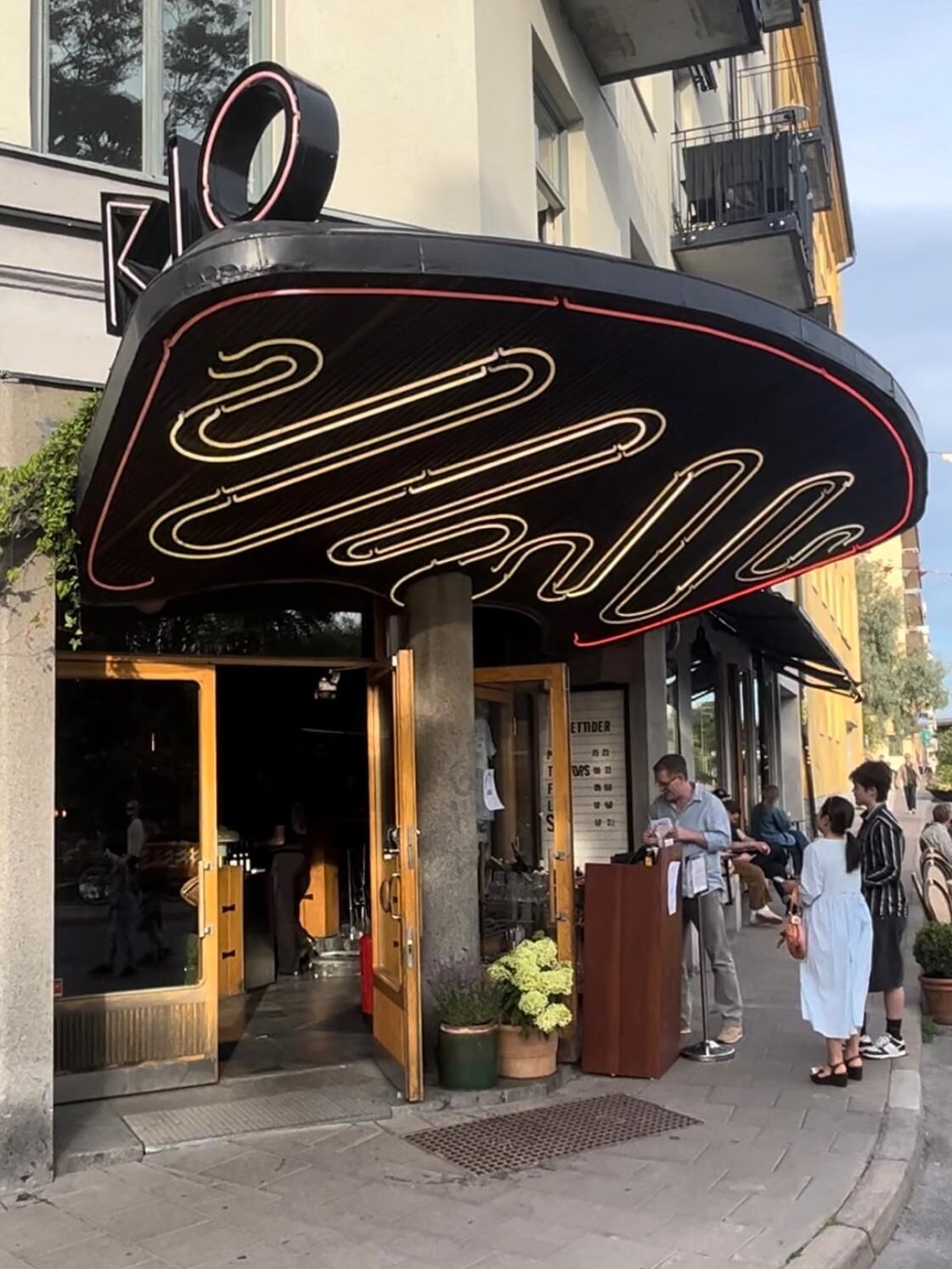
An independent cinema in Hornstull, housed in a historic theatre and complete with its own restaurant. A place to see a film in a setting that genuinely belongs to the neighbourhood rather than a shopping complex.
JUS
An independent boutique for more conceptual and avant-garde fashion, far removed from the Scandinavian high-street names we already know.
Grandpa
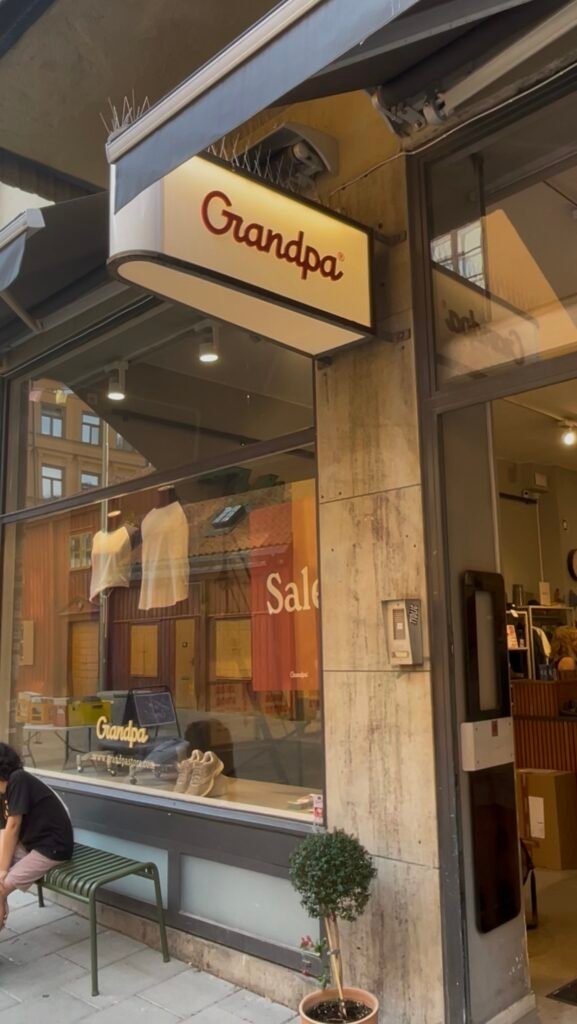
A SoFo lifestyle address combining fashion, accessories, objects and design. More interesting to explore as a whole world than as simply another shop.
A few detours
Långholmen Prison Museum
The former prison on the island tells around 250 years of penal history, until the prison closed in 1975. The visit includes access to a former cell and an insight into the conditions prisoners lived in. The contrast with Långholmen’s greenery, paths and swimming spots is striking.
Bergianska Trädgården
Stockholm’s large botanical garden, set beside Brunnsviken. A perfect option for rediscovering the generous nature that I loved so much about the city.
Kastellholmen
A tiny island connected to Skeppsholmen by a bridge, with the red Kastellet fortress and beautiful views across Stockholm. A short but particularly pleasant walk.
Vaxholm
For a different side of the Stockholm archipelago: wooden houses, waterfronts, boats and the atmosphere of a seaside resort. An escape worth considering if you are staying for several days.
Maison Chill Experience
Take a sauna before jumping into the water
In Stockholm, a sauna can lead directly to a swim. At Hellasgården, in the Nacka nature reserve,
you can go from the sauna straight into the lake before warming up again beside the water.
A very Swedish experience combining forest, heat and swimming.
Take a ferry as a means of transport
In Stockholm, boats are not simply tourist excursions. Several ferries are part of the SL
public transport network, meaning you can use them with the same ticket as the metro or bus.
A single adult ticket costs 43 SEK and is valid for 75 minutes, allowing you to enjoy a journey
across the water for the price of an ordinary trip. Route 82, between Slussen and Djurgården,
is particularly useful for seeing Stockholm from the water without booking a sightseeing cruise.
Plan a swim in the middle of your day
One of Stockholm’s most surprising features is that you can genuinely interrupt a day of
sightseeing for a swim. Right in the city centre, there are places such as Tantobadet in
Södermalm, Långholmen, Hornsbergs strandpark and Fredhällsbadet in Kungsholmen, as well as
swimming jetties at Munkbrohamnen and Söder Mälarstrand. Here, swimming is part of everyday
life, not something reserved for days spent outside the capital.