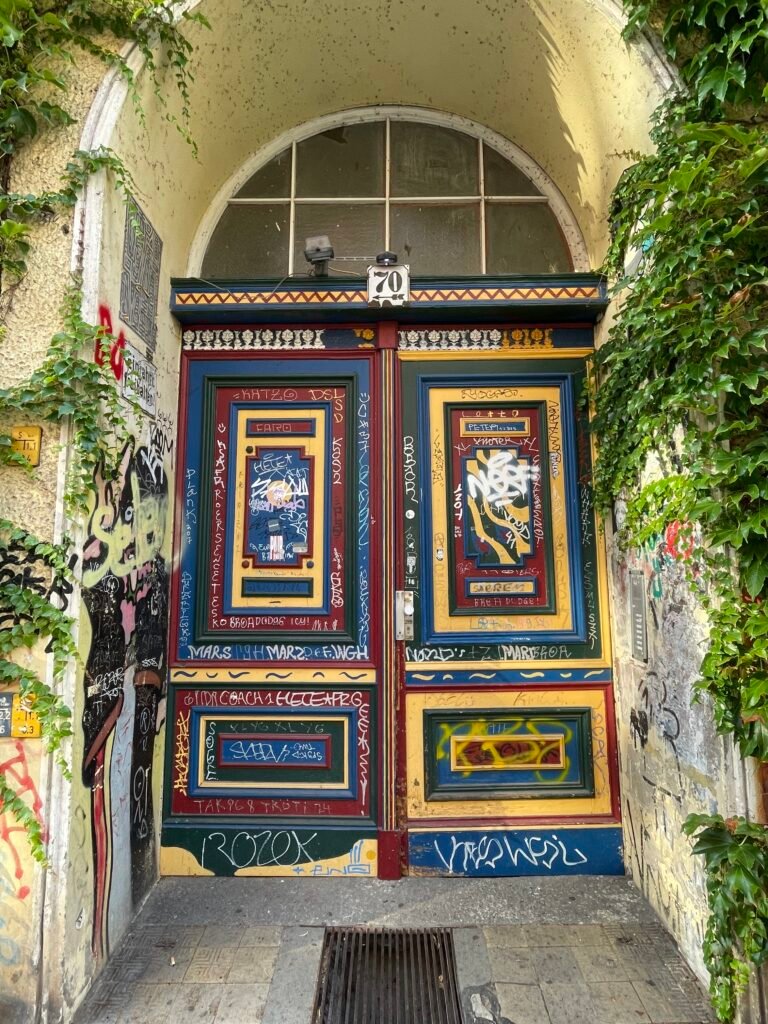
There are few cities where freedom feels quite so tangible.
Not because it is constantly proclaimed.
But because it feels hard won.
Berlin does not try to erase its past. It lives with it. The Wall, the memorials, buildings marked by decades of history, the empty spaces left behind… everything is a reminder that freedom here was never simply given.
And yet, what strikes you most is not the city’s past.
It is the way Berliners have chosen to live alongside it.
I thought I knew Berlin.
I had visited a few years earlier and, like so many others, I had fallen for its raw energy, its monumental murals, its former industrial sites and that unmistakable feeling that the city refused to fit neatly into any category.
Then, completely unexpectedly, I found myself thinking something I could never have imagined writing after my first visit.
I had only just begun to discover it.
Berlin is elegant.
I can already picture you raising an eyebrow.
So did I.
Because, let’s be honest, when most people think of Berlin, Birkenstocks worn with socks come to mind long before elegance.
And yet…
Berlin’s elegance has nothing to do with high heels or perfectly tailored suits. It lies in the freedom to be yourself, without ever feeling the need to impress anyone.
I began to understand this within my first few hours in Mitte.
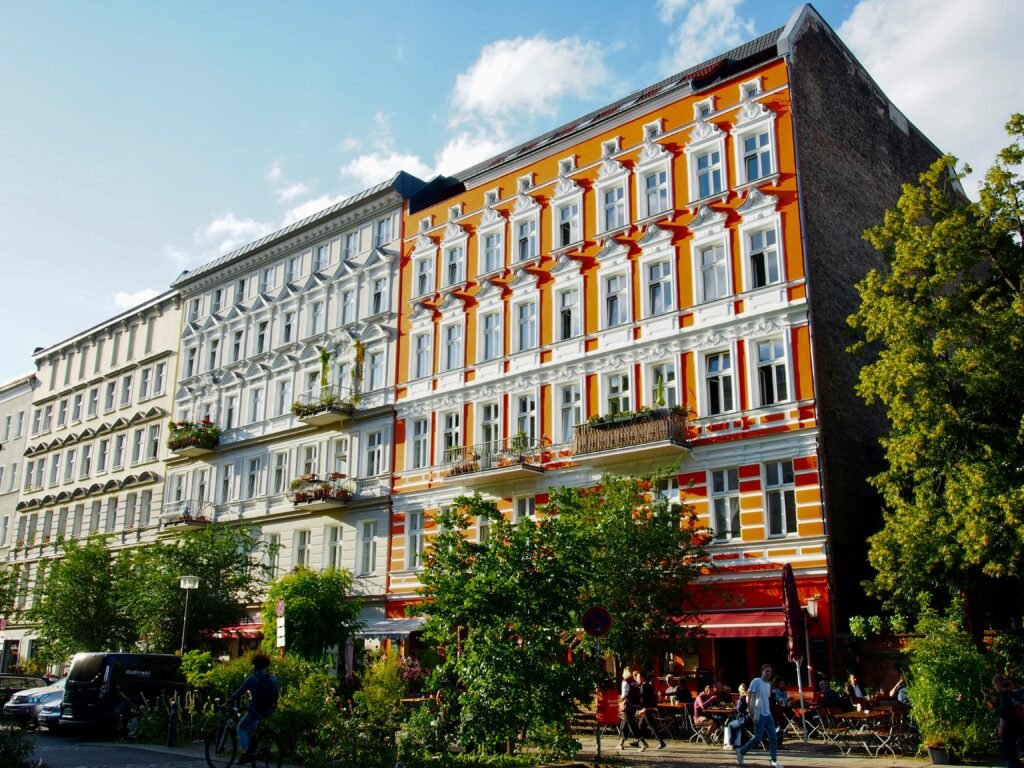
If there is one place that captures this understated elegance, it is Auguststraße.
I can spend hours there without ever looking at the time.
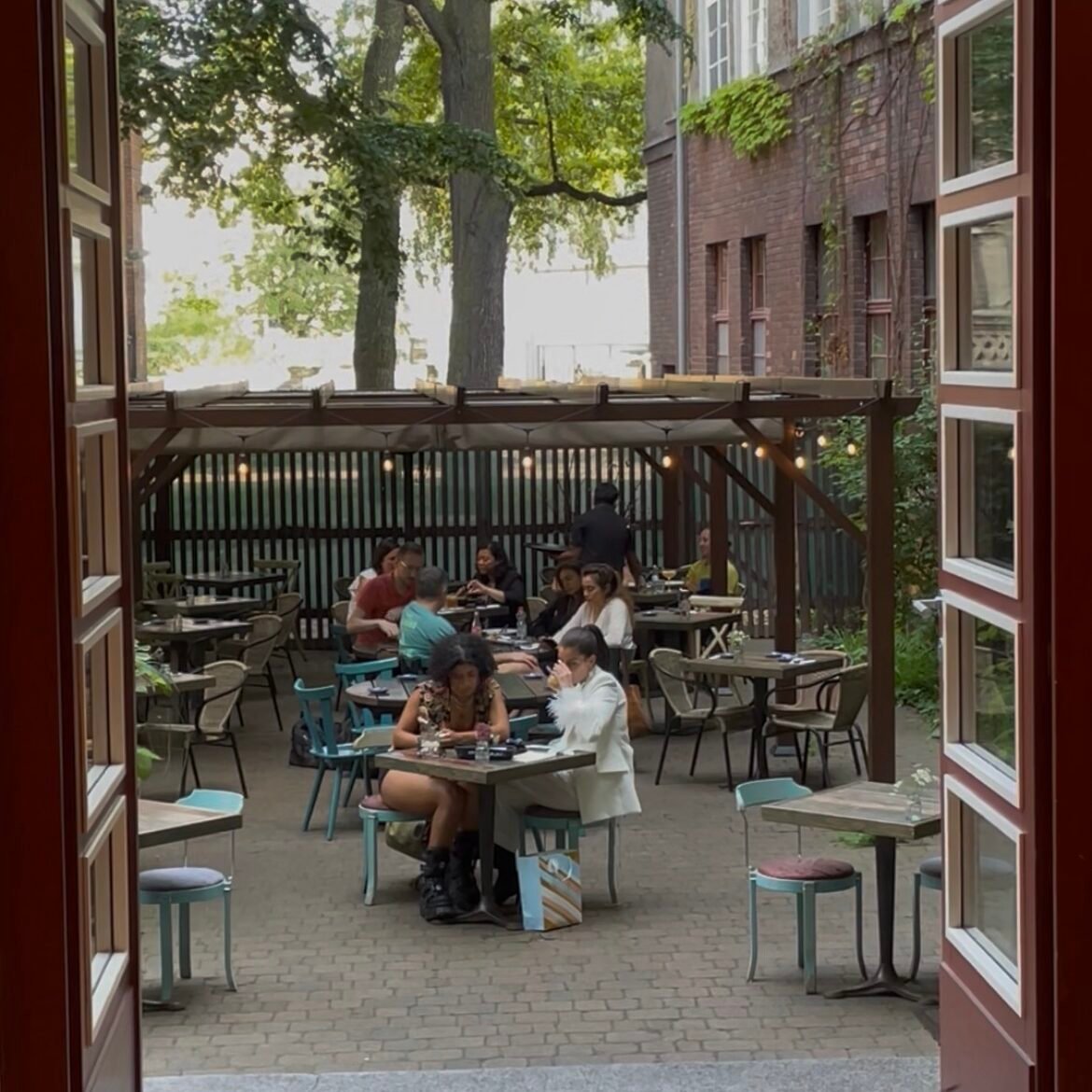
A gallery hidden behind a carriage entrance. A café tucked away inside a quiet courtyard. A bookshop discovered almost by accident. More often than not, all it takes is opening a door to stumble upon something unexpected.
Located in Mitte, Berlin’s historic heart, Auguststraße tells the story of the city’s transformation almost by itself. Once shaped by the division between East and West, it has become one of the most influential streets on Berlin’s contemporary art scene. Behind its discreet façades lie some of Europe’s most respected galleries. Just a few minutes away, Fotografiska devotes several floors to contemporary photography, while König Galerie has given new life to the former St. Agnes Church as one of the city’s most remarkable contemporary art spaces.
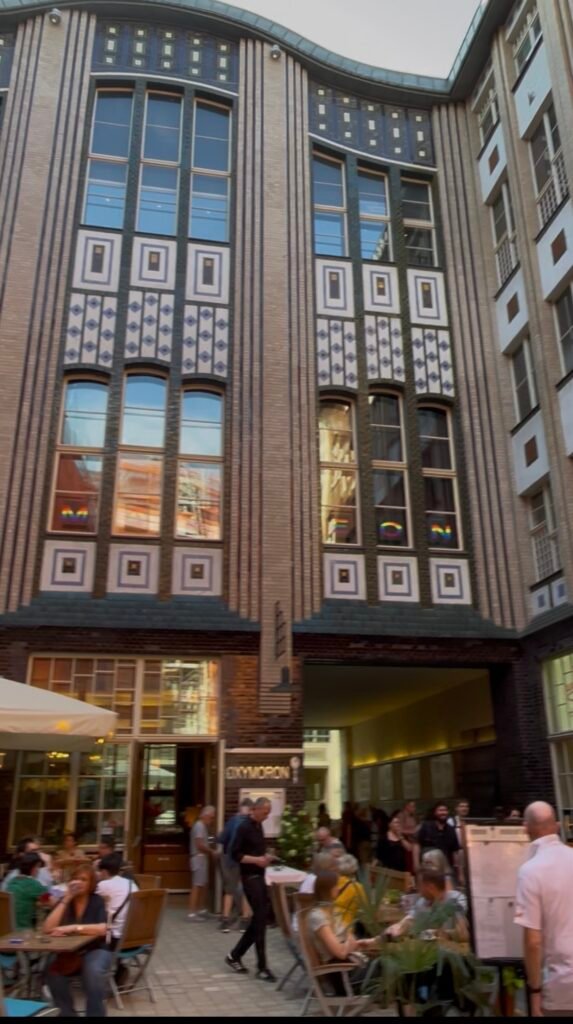
A short walk away, the Hackesche Höfe reveal another side of Mitte. Built at the beginning of the twentieth century, these eight Art Nouveau courtyards were originally designed to combine homes, workshops and shops. Today, wandering from one courtyard to the next feels like discovering a hidden village filled with cafés, independent boutiques and creative studios.
I enjoy wandering along Rosenthaler Straße just as much.
If there is one place where my husband knows he will have to be patient, this is it. I stop in front of almost every concept store. The selections are carefully curated without ever feeling intimidating. Emerging designers, beautiful stationery, interiors, independent labels… the sort of shops that make you want to redecorate your entire home when you had only set out in search of an ice cream.
It was also here that my children declared they had found the best ice cream in Berlin.
Actually… the best in the world, if their enthusiasm was anything to go by.
Three visits to Canal in just a few days.
I’d love to tell you we kept coming back to admire the Hackesche Höfe.
The truth is far less glorious.
We mostly came back for the ice cream.
And I have to admit… they may well have been right.
It was also in this neighbourhood that we wandered into the Berlin Biennale almost by accident. We thought we were simply visiting an exhibition. Instead, we ended the evening with a drink in hand at the bar inside the venue, right in the middle of an event we had never planned to attend.
A few U-Bahn stops later, another side of Berlin comes into view: Kreuzberg.
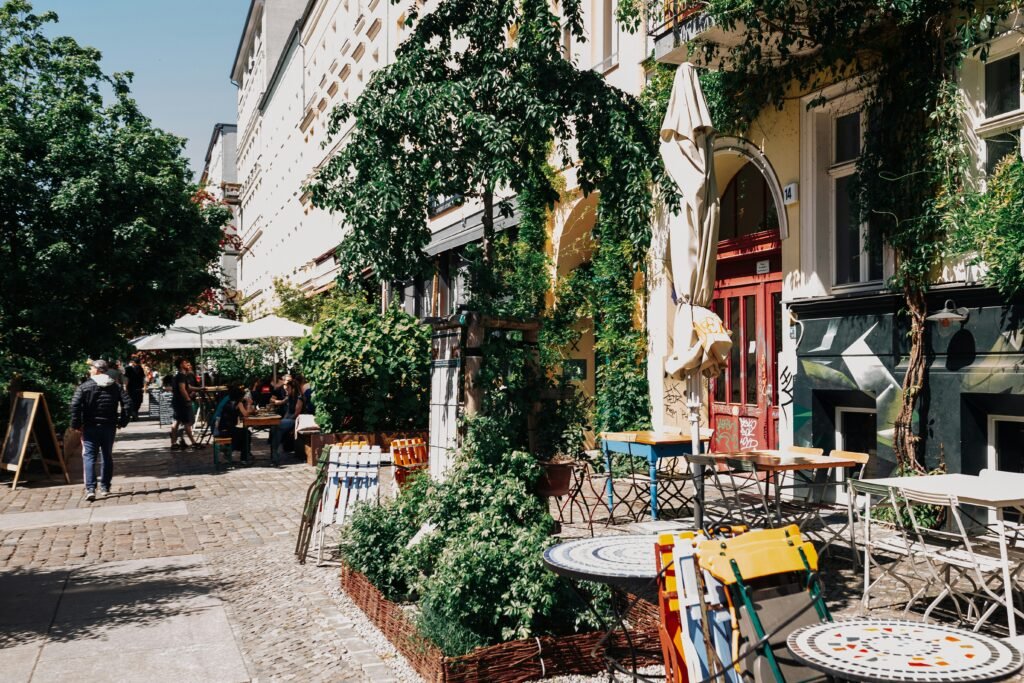
If Mitte tells the story of the city’s cultural revival, Kreuzberg reveals its freest spirit.
Bordering the Wall for decades, the neighbourhood became, from the 1970s onwards, a refuge for students, artists, musicians, activists and a thriving Turkish community. Long before diversity became a marketing slogan, it was already woven into Kreuzberg’s identity.
That is what makes Bergmannstraße and Graefestraße such a pleasure to explore.
You don’t come here to tick places off a list.
You come here to experience Berlin.
Cafés spill out onto the pavements, independent bookshops sit alongside concept stores, artisan bakeries share the street with restaurants serving flavours from every corner of the world. And before you even realise it, you’ve found yourself by the Landwehr Canal, where Berliners gather the moment the sun comes out.
In Berlin, neighbourhoods exist first and foremost for the people who live in them.
Perhaps that’s what makes them so appealing.
After the Wall came down, the city had to reinvent itself.
Berliners could have erased the traces of the past.
Instead, they chose to build with them.
I left with the feeling that Berlin still hadn’t revealed all of itself.
And perhaps that’s exactly what makes you want to return.
Stay in the Heart of Creative Berlin
Telegraphenamt
The city’s former Imperial Post Office has been transformed into one of Mitte’s finest hotels. Spectacular interiors, contemporary design and the perfect location for exploring Auguststraße, the Hackesche Höfe and Rosenthaler Straße on foot.
Château Royal
An elegant and discreet address where contemporary art meets refined interiors. A peaceful retreat just a short walk from Unter den Linden.
The Circus Hotel
Creative, welcoming and refreshingly affordable, right in the heart of Rosenthaler Platz. The perfect base for experiencing Berlin at its liveliest without compromising on comfort.
The City’s Finest Culinary Stops
Father Carpenter
Hidden away at the back of a quiet courtyard, this café has become a true Berlin institution. Outstanding speciality coffee, generous brunches and a peaceful atmosphere far removed from the city’s busiest streets.
House of Small Wonder
A light-filled café where the setting is every bit as memorable as the food. Japanese and European influences come together in a lush, green oasis.
Grill Royal
One of Berlin’s great institutions overlooking the River Spree. Refined cuisine, a beautiful terrace and a crowd that effortlessly mixes artists, gallery owners and loyal regulars.
Canal
Ice cream worth crossing the city for. Flavours change with the seasons, making every visit a little different. My children certainly thought so… they insisted on coming back three times.
Bonanza Coffee Roasters
One of Berlin’s speciality coffee pioneers. Simple, uncompromising and always buzzing with life.
Wander Differently
Auguststraße
Quite possibly Berlin’s most inspiring street. Galleries, cafés, concept stores and hidden courtyards invite you to slow down and let curiosity lead the way.
Rosenthaler Straße
The creative heart of Mitte. The kind of street where you step into a shop “just to have a look” and somehow emerge much later than planned.
Bergmannstraße
One of Kreuzberg’s most enjoyable streets, lined with independent bookshops, lively terraces and neighbourhood shops.
Graefestraße
Quieter and more local, it reveals a side of Berlin where life still unfolds at an unhurried pace.
Landwehr Canal
By the end of the day, its banks become Berlin’s outdoor living room. People simply gather here to watch the light change.
Doors Worth Opening
Fotografiska
One of Europe’s finest museums dedicated to contemporary photography, housed in a beautifully restored historic building. Don’t miss the rooftop before you leave.
König Galerie
A contemporary art gallery set inside the striking Brutalist St. Agnes Church. A place that perfectly captures Berlin’s remarkable ability to reinvent its architectural heritage.
Hackesche Höfe
Eight interconnected Art Nouveau courtyards filled with workshops, cafés, galleries and independent boutiques. One of the best places to understand the spirit of Mitte.
Do You Read Me?!
A must-visit bookshop for anyone passionate about photography, design, architecture and independent magazines.
Voo Store
One of Berlin’s most iconic concept stores, bringing together fashion, design and coffee in an atmosphere that perfectly reflects the spirit of Kreuzberg.
Worth the Detour
Tempelhofer Feld
A former airport transformed into one of Europe’s most extraordinary public parks. Berliners come here to cycle, run, picnic or simply enjoy the vast open space.
Charlottenburg
A more classical side of Berlin, where elegant avenues, royal palaces and discreet addresses reveal another chapter of the city’s history.
Pfaueninsel
A small island listed as a UNESCO World Heritage Site, perfect for a peaceful escape surrounded by nature.
Potsdam
Less than an hour away by train, palaces, gardens and lakes make for the perfect day trip to extend your stay.
The Maison Chill Way
Berlin is far more than its Wall, its galleries and its alternative spirit.
It’s easy to forget that it was once the capital of Prussia. Yet just twenty minutes away, Charlottenburg Palace reveals an entirely different side of the city: a magnificent Baroque residence, lavishly decorated state rooms, an outstanding porcelain collection, gardens inspired by Versailles and an elegance that feels worlds away from the Berlin most people imagine.
A few U-Bahn stops later, you’re back in a former industrial building transformed into a contemporary art gallery, or wandering through the creative streets of Kreuzberg.
And if you’re travelling with children, step inside a Kindercafé. Designed with families in mind, these cafés allow little ones to play freely while parents simply enjoy lingering over a good cup of coffee.
A simple idea, yet one that says a great deal about a city where quality of life is woven into everyday life.
It is in these contrasts that Berlin truly reveals itself.