
I’ve known Los Angeles for a long time. Long enough to know what I love about it, what irritates me, what fascinates me and what can leave me genuinely perplexed. I had already been there six times. I had dear friends there, memories that had had time to settle into their place, and that particular sense of familiarity one develops with a city one has explored extensively.
So why go back, nine years later?
The question stayed with me for a while. The last time, we had travelled as a family, but the children were still tiny: one was three years old, the other just five months. This time, they were finally going to discover Los Angeles through their own eyes, create their own memories and, above all, understand why their mother had always had such a complicated relationship with the city.
We left for a month and a half. Long enough to move beyond a simple tourist trip, develop routines, return to the same places several times, have our favourite spots and begin to recognise familiar faces. And yet, when we left, I still wasn’t entirely sure whether I missed Los Angeles itself or simply the people I love who live there.
As so often happens here, the answer was not going to be straightforward.
When we arrived, our friend Philippe March Jones was in Los Angeles for a week. A gallerist and exhibition curator in New York and Kensington, Philippe also holds an important place in the American art brut scene. He was in town for an exhibition dedicated to the artist Susan Te Kahurangi King at James Fuentes Gallery on Melrose Avenue.
Philippe is an important friend to us, and seeing him as soon as we arrived immediately gave the trip a particular tone. Los Angeles was already doing what it does so well: bringing together people, stories and worlds that, on paper, had no reason to meet in the same place.
Between Santa Monica and Venice

Before we even left, I knew one thing for certain: I wanted to be close to the ocean. Venice, or Santa Monica at worst. Not Downtown, not Hollywood, not West Hollywood.
We were on holiday, admittedly for quite a long time, but still on holiday. I was looking for light, bike rides, bare feet in the sand, long days and that famous Californian ease of living that I still find rather seductive, despite everything I can criticise about California.
We found an absolutely beautiful apartment, perfectly situated between Santa Monica and Venice, just a few steps from the huge beach. Venice Beach on one side, Santa Monica Beach on the other.
On the eleventh floor, with the ocean stretching out before us, we also had access to a whole residential complex that almost felt like a private little town: an Olympic-sized swimming pool, gym, lounge areas, café, reception, security… In the end, all that was missing was an excuse never to leave.
For the children, the Olympic-sized pool became one of the great memories of the trip. I think they could still tell you its dimensions, where they swam and how much time they spent there.

In the morning, we would go downstairs for coffee before heading out to discover another part of Los Angeles. In the evening, we would return to the beach for sunset, then head to the pool to help the children wind down. This was our anchor. The rest of the trip would involve setting off each day for a different part of the city, then coming back here.
Culver City: The Unexpected Favourite

Before settling near the ocean, we spent three days in Culver City. I already knew its history very well. Culver City is closely connected to American cinema, particularly through the former MGM empire. The Wizard of Oz, Gone with the Wind and Singin’ in the Rain are among the films associated with the history of its studios. I had known all of this for years.
What I had never done was simply stop there.
We were staying in a small Californian house with a vegetable garden and an absolutely magnificent pomegranate tree. Nothing spectacular. Just a house, a garden, quiet streets and the feeling of spending a few days in a much more everyday version of California.
And I loved it.
There was something rather amusing about sleeping in a peaceful little house in the middle of a place that had helped create the great Hollywood mythology. Cinema is everywhere, but it doesn’t need to announce itself. You can think about the studios and all the films that were made here, then watch someone watering their vegetable garden as though nothing extraordinary had ever happened. That contrast was probably what won me over.
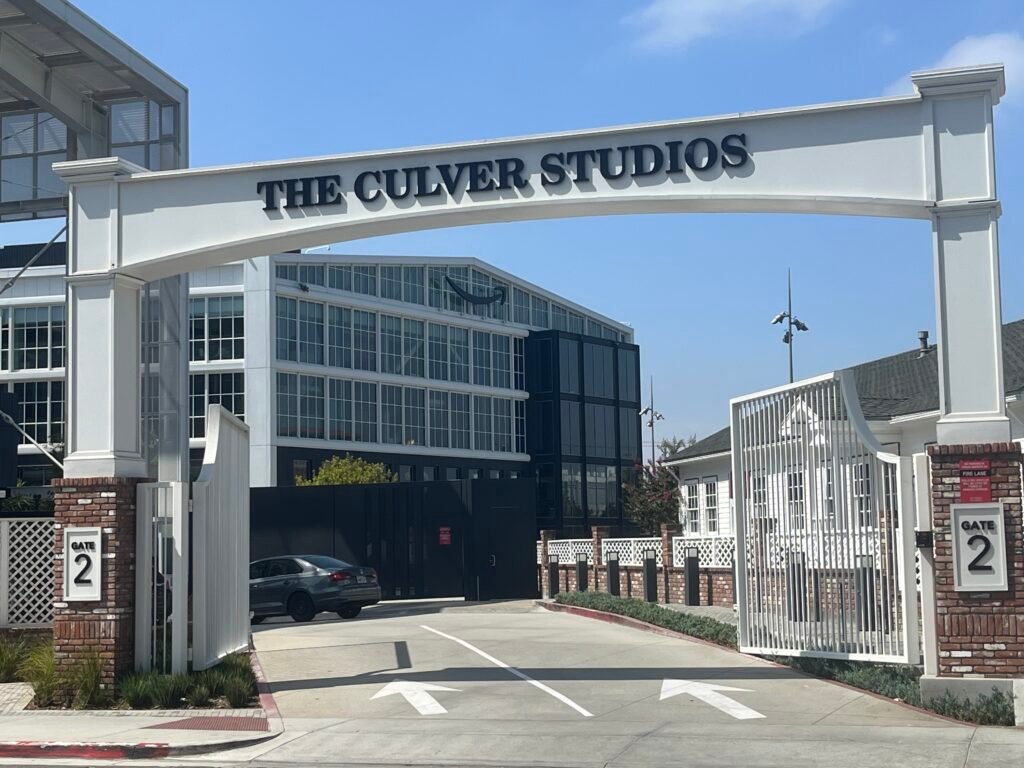
Culver City also has something quite distinctive about it: many people who work in the film industry live there. Producers, directors, technicians and members of production teams. People who make films, often far away from red carpets and billboards.
You can live in the middle of an immense Hollywood history and, on the very same day, tend to your garden, do your shopping, buy fruit at the market and quietly make your way home.
We returned several times during our stay, particularly for the Tuesday farmers’ market. The fruit was incredible. The stalls were generous, the atmosphere local, and people came simply to do their shopping. It was a different energy from the one we instinctively associate with Los Angeles: softer, more local, more human.
Culver City hadn’t been part of my original plans. And yet, it gradually became part of my routine.
A City That Takes Everything to the Extreme
Los Angeles is a city that makes people dream. Cinema, of course. Spirituality, wellness, body culture, studios, stars, grand houses, palm trees and dreams of success.
All the clichés exist. The amusing thing is that they are often true.
You can walk past a yoga studio, cross paths with someone talking about meditation, see a gym filled with perfectly sculpted bodies, then hear about a new diet, a new method for staying young or a new way to become wealthy.
Sometimes I wonder where conviction ends and performance begins. Is everyone genuinely spiritually connected? Or is everyone mainly trying to save themselves? To avoid ageing too quickly, falling ill, failing, becoming rich, famous or admired?
Los Angeles can sometimes feel like a city where people work tirelessly to become the best possible version of themselves. Even if that means spending an extraordinary amount of time looking at themselves.
That’s probably why La La Land leaves me with such a strange feeling. I love Los Angeles, but I struggle with this perfectly choreographed vision of a city that, in reality, is much more complex.
Here, dreams exist alongside misery. Success exist alongside failure. Wellness exists alongside very visible precarity. The quest for self can seem sincere, just as it can sometimes give the impression of having become an industry.
Everything is magnified tenfold. Ego. Success. Fame. Beauty. Poverty. Ambition.
It is probably this contradiction what fascinates me as much as it annoys me.
I still don’t know exactly why I feel so attached to Los Angeles. Perhaps it’s because my friends live there. Perhaps it’s because I know the city well enough to have my own habits and favourite places. Perhaps it’s because I love its duality, its imperfect side, sometimes ruthless, sometimes absolutely beautiful.
Or perhaps simply because certain cities eventually become intertwined with fragments of our lives.
West Hollywood: Ramos’s City
Ramos, my big brother over there, loves West Hollywood. In fact, he was determined to find us somewhere to stay in the neighbourhood during our trip.
I said no, because I already knew I wanted to live close to the ocean. But I completely understand why he loves being there.
Ramos is one of those people everyone seems to know in Los Angeles, and far beyond it too. You’re not always entirely sure why, and perhaps that is precisely what makes him so charming.
He is quite a character. He has a distinctly streetwise style that suits him perfectly, along with an enormous network built over the years. He belongs to that category of people who are not necessarily in the spotlight, but know those who are, connect them with one another and play an important role behind the scenes of the entertainment world. He is rarely centre stage, but he is never very far from where things are happening.
Ramos lives in Larchmont, just a few minutes away. West Hollywood nevertheless remains one of his favourite territories. He is particularly fond of the Chateau Marmont and Soho House West Hollywood.
West Hollywood is small by Los Angeles standards, yet it concentrates an astonishing number of things: the Sunset Strip, fashion boutiques, galleries, the Design District, restaurants, hotels, bars, design destinations and a wonderfully mixed population of creatives, regulars, visitors and celebrities.
The Design District is especially interesting to me. The showrooms, galleries and furniture shops give this part of the city a genuine creative identity. You find that combination of design, fashion, architecture and lifestyle that I particularly love.
The Pacific Design Center is also a reminder that Los Angeles is not simply a city of cinema and music. It is a true city of design and architecture.
Further along, the Sunset Strip tells another story. It has welcomed generations of musicians and artists, while the hotels and restaurants in the area have long been frequented by figures from the worlds of film and music.
Celebrity seems less exceptional here than elsewhere because it has almost become part of the scenery. What I particularly enjoy is the relative calm of the neighbourhood. You can be surrounded by highly desirable places without constantly feeling as though you are inside a tourist attraction.
You walk, do your shopping, have a coffee, go out for dinner. In Los Angeles, being able to walk without having a specific destination is almost a luxury.
Melrose: Sometimes the Walls Are More Famous Than the Shops

The following day, we headed towards Melrose, one of those neighbourhoods that continues to draw people in. Shops change, restaurants appear, certain places disappear, but the street retains a very particular power of attraction.
At Paul Smith, the famous pink wall has become almost more recognisable than the shop itself. I watched young women take turns posing in front of the façade, some of them seemingly without any intention of stepping inside. The Paul Smith store, however, seemed rather removed from what they were actually looking for: chic, classic, slightly preppy fashion. The wall, meanwhile, has become a backdrop independent of the brand.
People no longer necessarily come to buy something. They come to be photographed in front of it.
That is very Los Angeles, when you think about it. Here, a shop can become a backdrop, a café a destination, a courtyard a background. The city has long known how to manufacture images. Social media has simply accelerated the process.
On Melrose Avenue, I also rediscovered HYPEACH, a shop where everything feels desirable. Then, continuing towards Sunset Boulevard, I noticed that the famous Supreme brand had opened a store in the former Tower Records location.

Two very different worlds, yet each tells its own story of a Los Angeles where fashion, culture, music and architecture often end up blending into one another.
A little further on, the new Aimé Leon Dore flagship offers another perspective on the same phenomenon. Opened on Melrose in 2026, the space combines a shop, café and garden in a setting inspired by Mediterranean homes, with a mature olive tree at the centre of the courtyard. Café Leon Dore extends the experience with its Greek-inspired atmosphere, wood panelling and espresso bar.

I loved the idea of a place that no longer truly separates fashion, coffee, architecture and lifestyle. You come to look at the clothes, have a coffee, sit in the garden and watch people go by.
In Los Angeles, a shop is never quite just a shop.
Beverly Hills: The Dream, Perfectly Maintained

Beverly Hills belongs to a different category altogether.
Here, everything seems to have been designed to ensure that the American dream never misses a beat. Residential streets are lined with trees, gardens are immaculate, houses disappear behind hedges, and Rodeo Drive presents its luxury brands in a setting that could easily become a caricature.
And yet, Beverly Hills is about more than shopping.
What interests me more is the way the city turns luxury into an everyday experience. A spectacular car parked outside a café does not necessarily attract attention. A shop that would be an event elsewhere becomes simply one shop among many.
Even extravagance eventually begins to feel normal.
I also stopped at Bloomingdale’s in Beverly Connection, where I fell for two flamboyant dresses. Perhaps that is part of a stay in Los Angeles, too: you leave with a very precise idea of what you are going to do and return with two dresses you had absolutely not planned on buying.
Westwood: The Neighbourhood That Surprised Me
Another day, we headed towards Westwood.
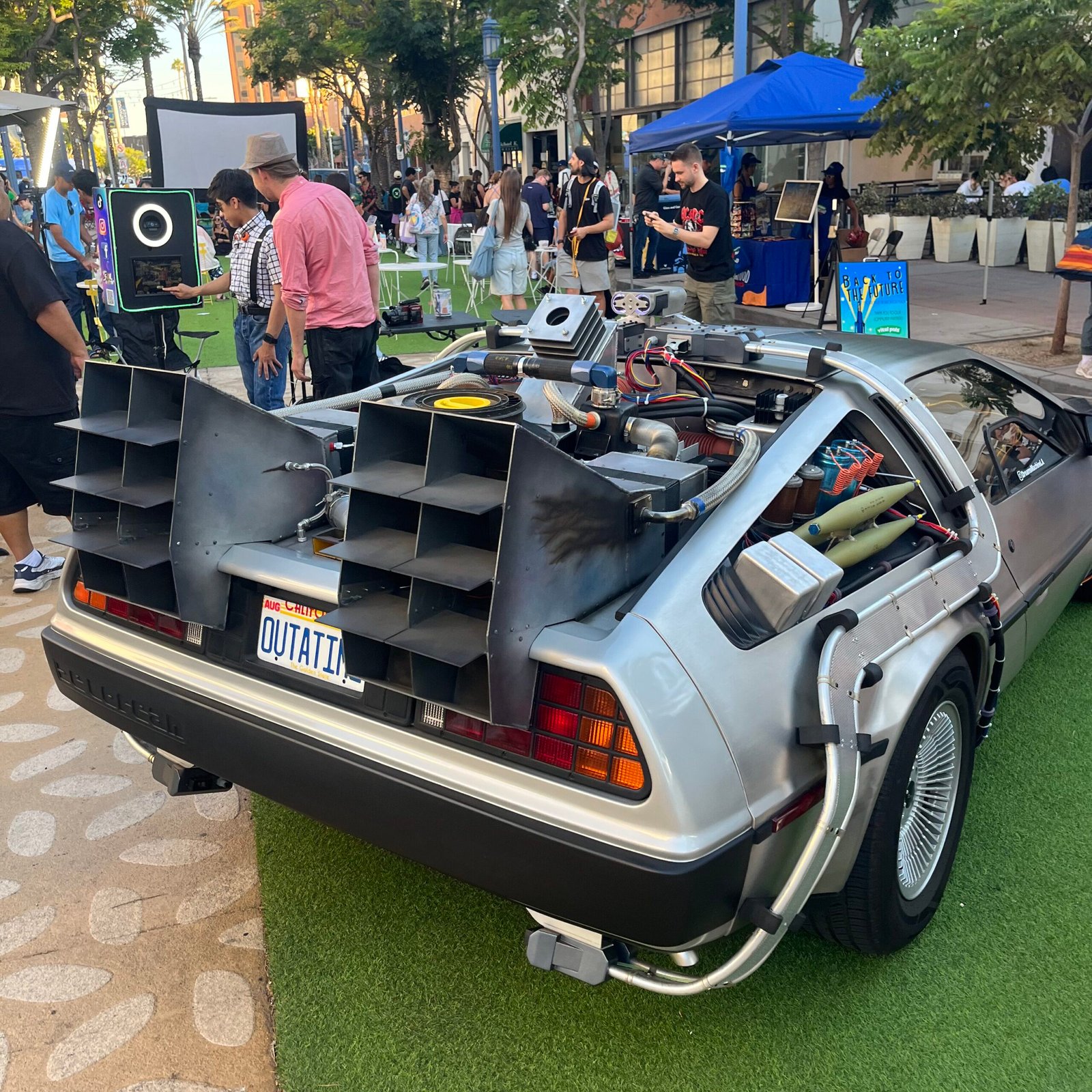
I had not necessarily planned to spend much time there. We went with the children for an outdoor screening of Back to the Future, and that evening made us want to look at the neighbourhood differently. Inseparable from UCLA, Westwood has a distinctive architectural character, with façades, towers and arcades that tell part of its story. In the late 1920s, the Janss family envisioned a fully planned urban development around the future university, whose campus opened its doors in 1929.
As you walk through Westwood Village, you can still read that history in its façades, towers, arcades and historic buildings. The Janss Dome, the Fox Theatre and the former Ralph’s building are reminders of a time when commercial neighbourhoods were designed with genuine architectural ambition. Several buildings in the village are also listed on the National Register of Historic Places.
There is also a university atmosphere that completely changes the make-up of the neighbourhood. Students, families, residents, film lovers and visitors move between restaurants and small shops. The Hammer Museum and the Geffen Playhouse also contribute to its identity.
But what stayed with me most was our evening.
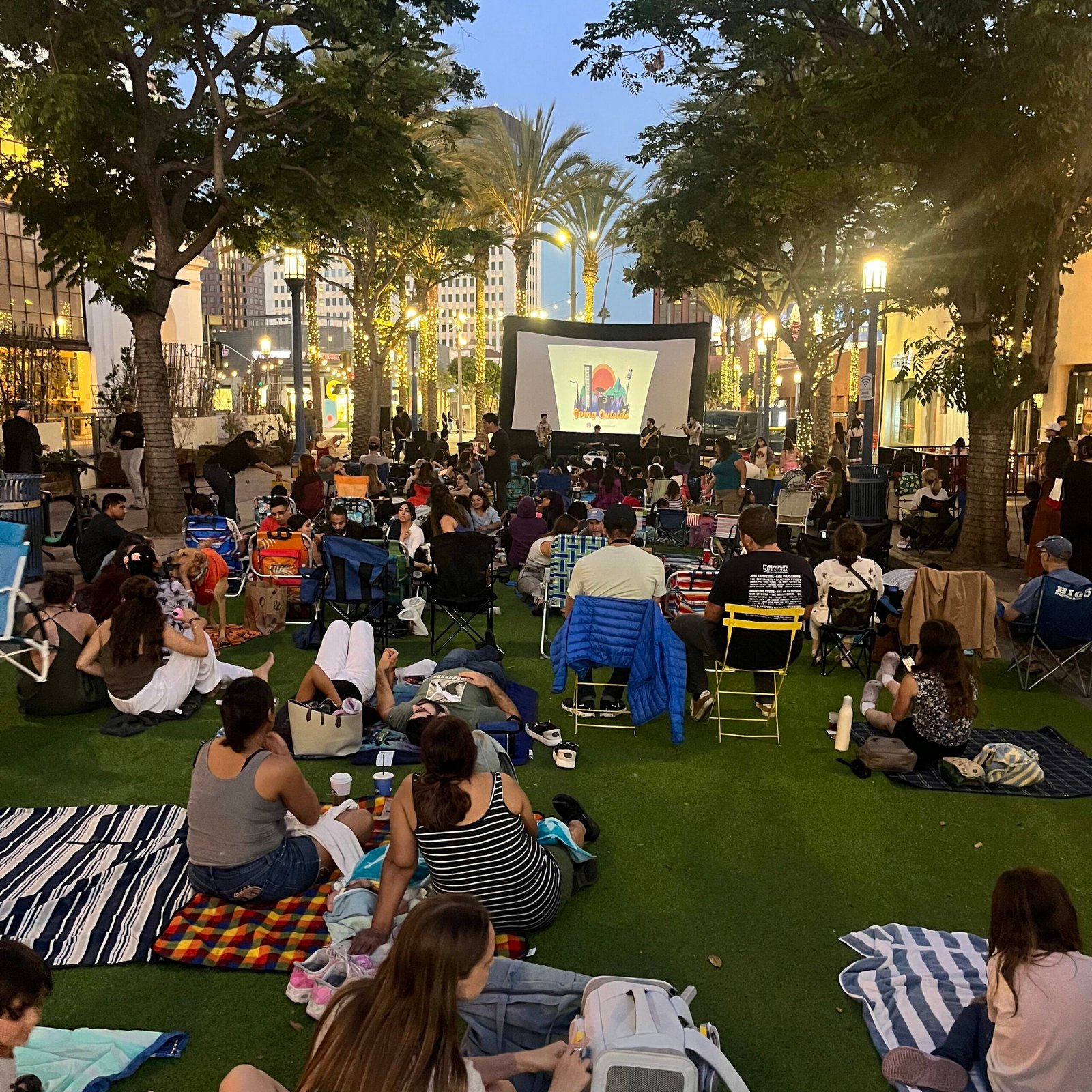
Everyone brought their own blanket, we settled outside and watched the film beneath the Californian stars. The children received gifts.
The famous DeLorean from the film was there. For them, it was obviously extraordinary. For me, there was something wonderfully gentle about the scene: a street transformed for a few hours into a meeting place, families and children, a film known by heart across several generations, and a car that had become almost a character in its own right.
We watched Back to the Future beneath the stars. I honestly could not have asked for much more.
Venice, My Old Love
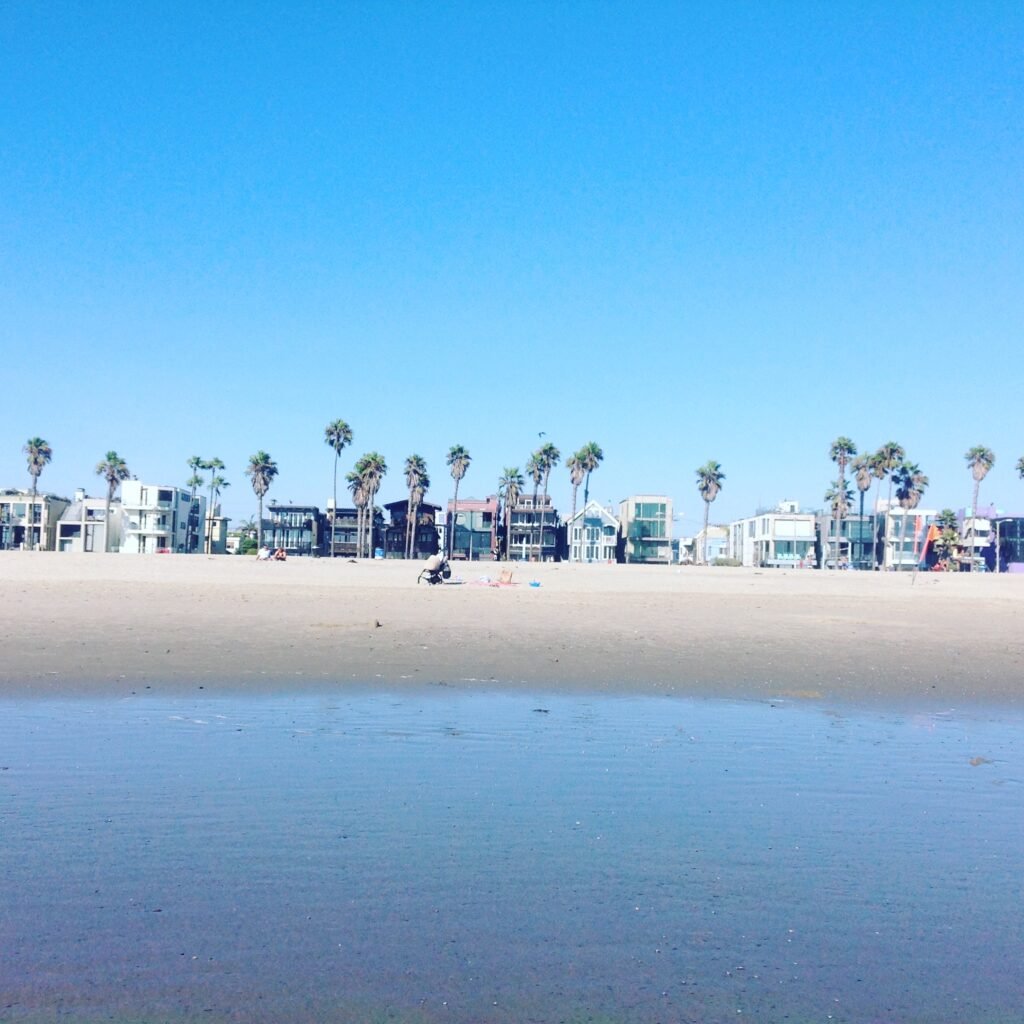
And then there is Venice. I have known it since 1996.
I know that many people associate Venice with its beach and perhaps its canals, and leave it at that. That is a shame. Venice is so much more than that.
The beach remains a spectacle in its own right. Skateboarders, artists, athletes, musicians, tourists, improbable characters, people who seem to have stepped out of a music video and others who appear to have forgotten they are in a city at all: together, they create a never-ending theatre.

But Venice is timeless.
It does not need to be tied to a particular era. It changes, evolves and welcomes new places, but it retains the freedom that has made me love it for so long.
And then there is Abbot Kinney.

It is my favourite street.
I even think it might be one of the trendiest parts of Los Angeles, with its shops, restaurants, ice-cream parlours, concept stores, photogenic façades and people strolling around as though they have absolutely nothing urgent to do.
This is where you find Fast Times, behind Buck Mason. I loved the place, even more so when I discovered a book dedicated to my friend Philippe March Jones. That small coincidence naturally made me smile.
Fast Times brings together a café, bookshop and gallery in a very pared-back space, with art books, ceramics, contemporary furniture and that distinctly Los Angeles aesthetic in which even a coffee cup seems to have been chosen with an art director in mind.
The children, meanwhile, already felt completely at home at Fast Times, as though they had decided that the place belonged to them.
Abbot Kinney is also where I rediscovered the porous relationship between fashion, interiors, culture, books, coffee and lifestyle that I love so much about Los Angeles.
It is also home to Café Gratitude, one of my favourite restaurants in the United States. I had some of the best vegan food I have ever tasted there. Their key lime pie remains a small personal obsession.
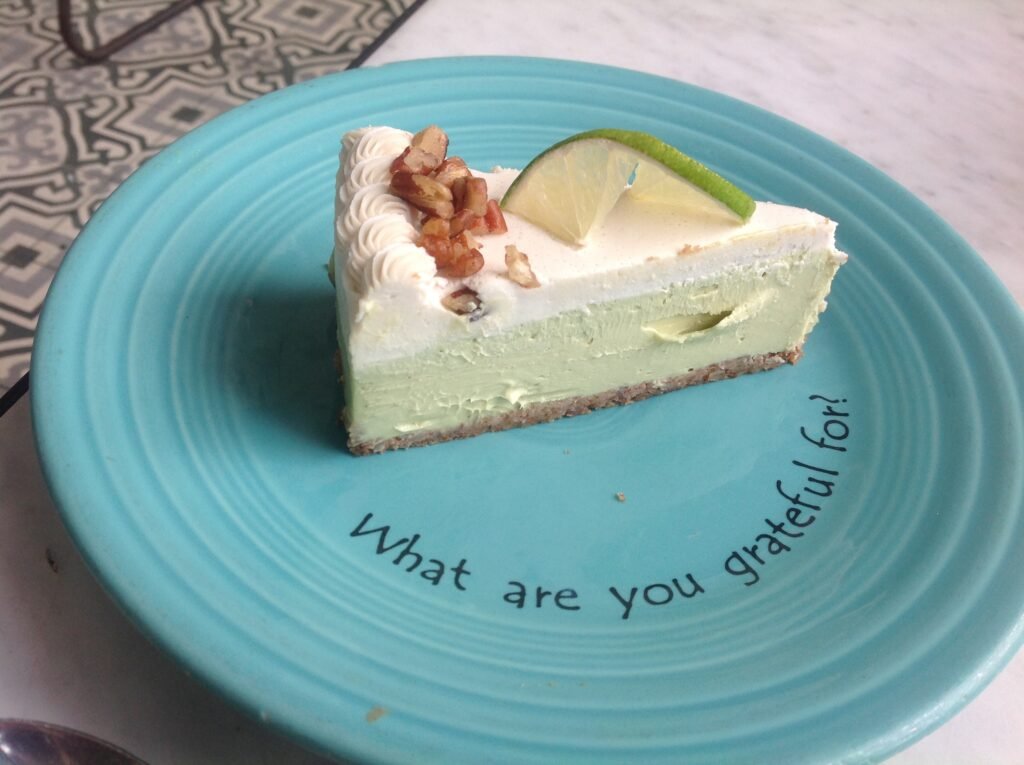
I could probably take a trip to Los Angeles solely for that pie. It would be a questionable justification, but one I would accept rather easily. A few years ago, I even ordered their cookbook from France.
The burgers at The Win~Dow also deserve a place among my culinary discoveries. We tried several locations during our stay, in Venice, Santa Monica, on Hollywood Boulevard and at The Grove, and they were delicious.
Venice is also home to Erewhon, the ultra-chic and particularly expensive grocery chain that has become a true symbol of the Californian lifestyle. You find it in several of Los Angeles’ wealthiest neighbourhoods, and its presence is almost an indicator of status. Carefully selected products, prepared food, juices and impeccable aesthetics… Here, even grocery shopping can feel like an outing. Erewhon has no real equivalent elsewhere, and that is also what makes it so distinctly Californian.

Venice is also about the canals.
I love them because they tell another story of Venice, quieter, almost intimate. Abbot Kinney’s dream was to recreate a version of the Italian city of Venice in California, complete with canals.
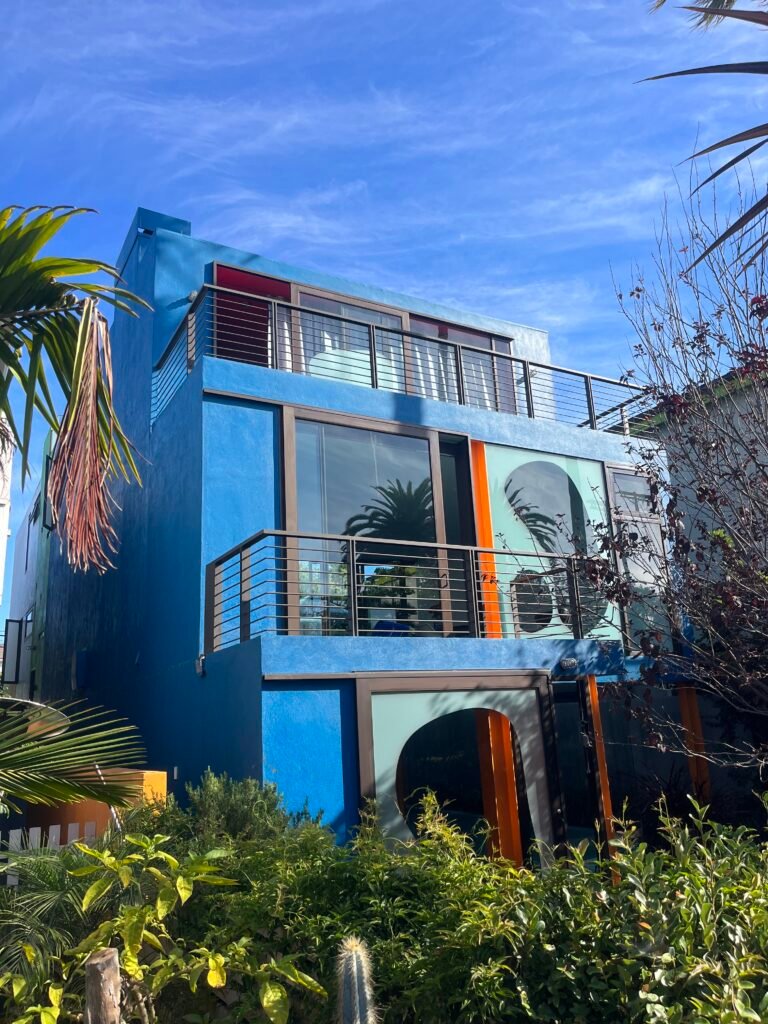
A slightly mad idea that eventually became one of the neighbourhood’s most recognisable landscapes. I also think of Julia Roberts, one of my favourite actresses for many years, who lived in Venice and frequented some of the places I love.
I like these kinds of details. They remind us that behind the places we discover today are also the stories of those who loved them before us.
Santa Monica, Our Neighbourhood
After Venice came Santa Monica.
This was our neighbourhood, our everyday setting, the place we returned to each evening. It was therefore impossible to tell the story of this trip without giving it its own space. Santa Monica is calmer than Venice. More family-oriented, too, and probably more touristy, but with a genuine sense of ease.
The beach, pier, bicycles, joggers, children, restaurants and shops give the neighbourhood an effortless quality that you appreciate all the more after spending several hours crossing Los Angeles. It is probably the part of the city that most closely matches the image people have of California.
Main Street became one of our favourite places to wander. I discovered Lost & Found, an incredible shop where interiors and clothing come together. Then there was 2nd STREET, a vintage and second-hand store where I found two pairs of jeans in absolutely pristine condition.
As usual, I also ended up buying spices to bring home. This time, they came from Trader Joe’s, the supermarket that has become something of a trend thanks to its unusual products and tote bags.
Malibu and Pacific Palisades
We also headed towards Malibu and then Pacific Palisades, which is slowly recovering after the fires. The scars are still visible, but life is slowly returning, as it so often does in California.
After all the familiar images of Los Angeles, there was something particularly striking about seeing this part of California at that moment: a beautiful landscape, marked by what had happened, but already looking towards what comes next.
Downtown: Another Face of Los Angeles
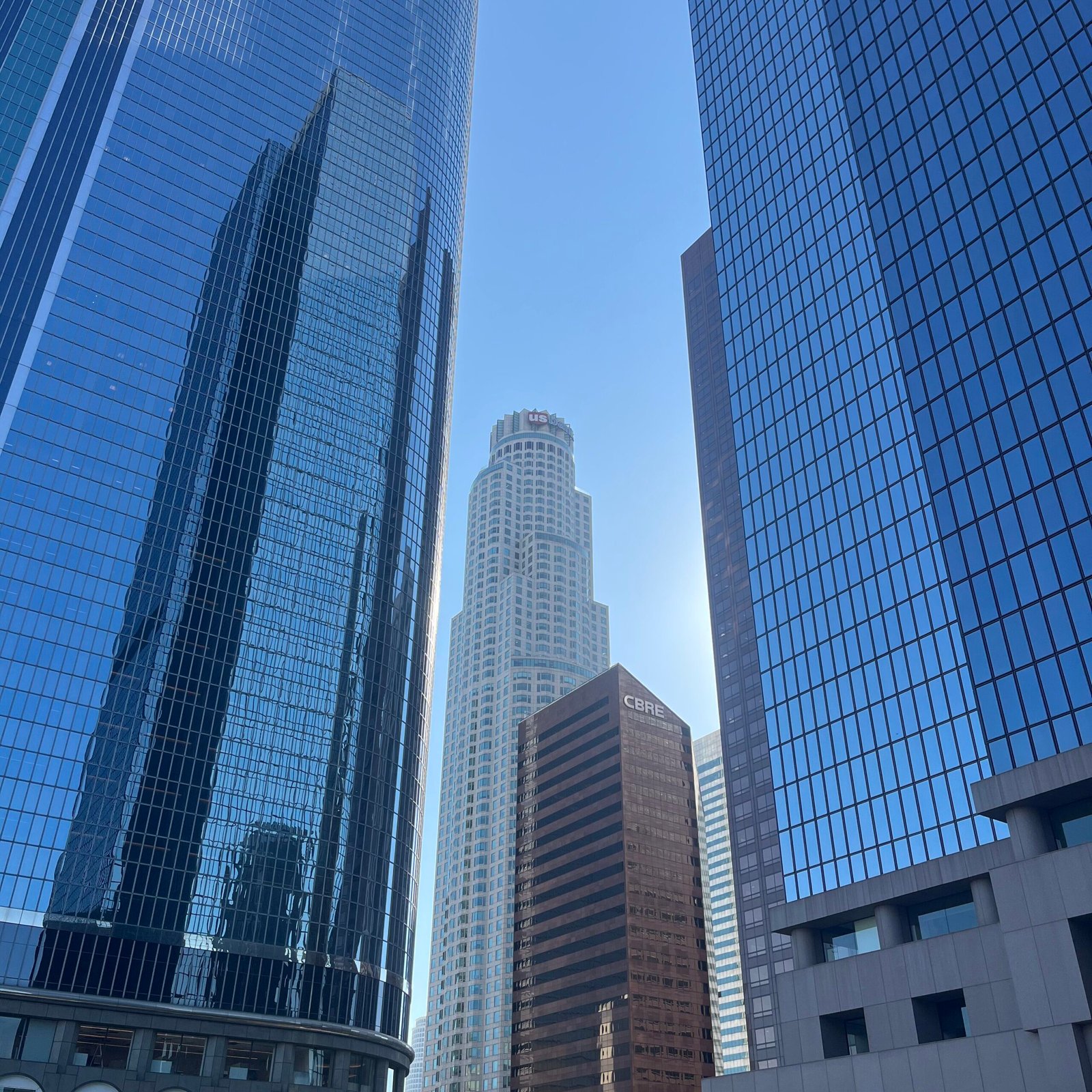
Of course, we had to go to Downtown.
I love its museums, its architecture, its streets, its historic buildings interwoven with more recent constructions. I love the feeling of rediscovering genuine urban density after the more spread-out neighbourhoods of the West. But Downtown is not a single neighbourhood. There is Historic Core, the Arts District, Little Tokyo, South Park, the Fashion District, Chinatown and Bunker Hill. Each area has its own atmosphere.
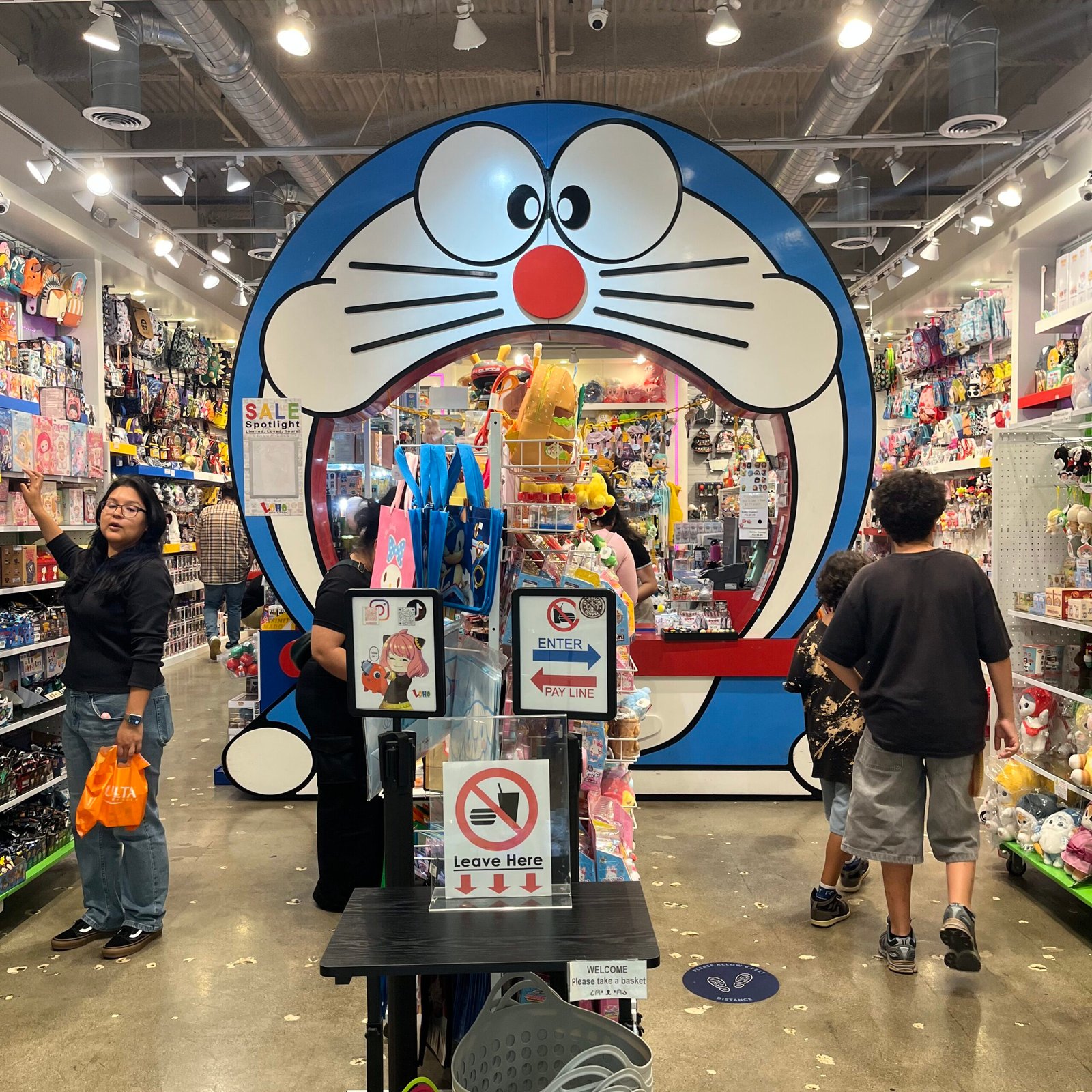
The children particularly enjoyed Little Tokyo. They have been dreaming of going to Tokyo for a long time, a city I already know, and one I will tell them about in another story someday. Here, they discovered this small piece of Japanese culture with a rather touching sense of curiosity, as though Los Angeles had offered them a glimpse of the journey they are already looking forward to.
The Arts District, meanwhile, always has a very particular effect on me.
Its former industrial buildings, transformed into galleries, cafés and creative spaces, its painted walls, and the way it brings creativity and everyday life together immediately remind me of New York, the city that holds my heart.
Downtown also forces you to look at what other neighbourhoods sometimes allow you to forget. The presence of people experiencing homelessness is significant, and certain areas can feel unsafe in a way that has little in common with the glamour of Beverly Hills or the laid-back atmosphere of Venice.
I cannot pretend not to see it.
That is also what troubles me when Los Angeles is reduced to a postcard. The city is capable of extraordinary beauty, but it also carries very visible fractures. Both exist at the same time.
I also had a very personal affection for The Original Pantry Café, where I used to love going for breakfast. It had the atmosphere of an old diner, where the servers seemed to be part of the walls and knew exactly what they were doing. It closed, taking with it a small part of my Los Angeles routines. But there has been talk of reopening…
Hollywood Boulevard: The Setting…

Hollywood Boulevard is, of course, unmissable.
The stars on the pavement, the Chinese Theatre, the premieres, the costumed characters, the souvenir sellers: everything you imagine is there. What I like is that Hollywood Boulevard no longer even tries to pretend.
It knows visitors come looking for cinema, and it serves them an XXL version of cinema.
During the day, it is a vast open-air theatre. In the evening, the atmosphere becomes considerably less appealing, and the miracles you might encounter there are not necessarily the kind you would tell your children about.
My children, meanwhile, had a very different experience of the Chinese Theatre. There was the gaming camp centred around YouTube and video games, organised by Fonzie. And then there were the Minions on the red carpet.
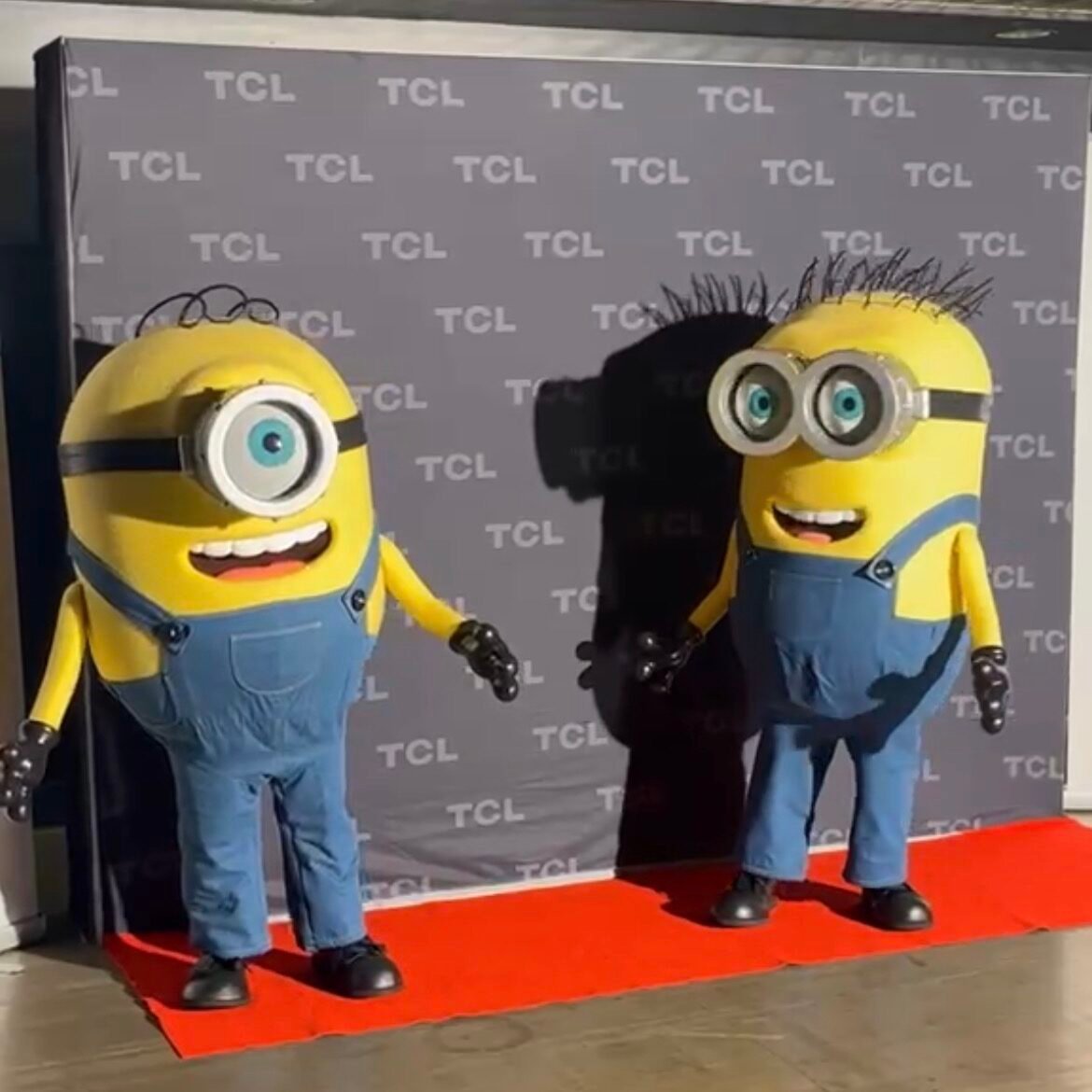
For them, Hollywood is therefore not just about stars on the pavement. It is also a gaming camp and a red carpet filled with characters they know.
I do not think they will ever have exactly the same definition of Hollywood as I do.
The Places Where Los Angeles Becomes Personal
A city eventually becomes a collection of people.
Laquelle Mari is an extraordinary and talented woman, someone who holds an important place in my heart. Her journey is, in itself, a small story of contemporary California, at the crossroads of innovation, artificial intelligence and the technologies of tomorrow.
She works primarily in the fields of artificial intelligence and quantum technology, and has been involved in developing technologies at the intersection of these two worlds. She is a co-inventor of a photonic quantum artificial intelligence technology.
In Los Angeles, she is also developing her work around innovation and the future of AI through Future of AI Studio. She is involved in thinking that extends beyond technology itself: strategy, innovation, new applications for AI, and the ways in which these technologies will transform our society.
She is also involved with the U.S. AI Council and took part in creating the Declaration of Artificial Intelligence for the Future of Humanity.
What I love about Laquelle, beyond all of this, is that she is nothing like the caricature of someone working in deep tech. She is funny, beautiful, brilliant and curious, and passionate enough to move from a conversation about the future of artificial intelligence for the benefit of humanity to something hilarious within a matter of seconds.
That is also why she matters to me.
Los Angeles is full of people who invent, produce, imagine and are already trying to build what comes next. Laquelle is one of them, but above all, she remains Laquelle: a friend, someone important to me, and one of those encounters that make a city feel much more personal.
Mario Tahi Lathan is an old friend. We lived in New York at the same time. He later chose California for its quality of life, while I remained deeply attached to New York.
He is a director, producer and editor, and a graduate of Howard University. His work has taken him across documentary, television, music and culture, with productions broadcast on PBS, TNT, BET, ESPN, CNN, E! and NBC, among others. He has directed several documentaries devoted to music and culture, including This Is The Bash, about Haitian jazz musician Jowee Omicil, and Jaimeo Brown’s Transcendence.
I particularly love the way he tells stories: with one foot in cinema, another in music, and an enduring curiosity about people and cultures.
He is one of those friends who knew another chapter of my life, my New York years, and who give Los Angeles an added depth. When you see someone again after years apart, you never reconnect only with the person themselves. You also reconnect with a version of yourself.
And then there is Gerald Clayton, my little brother.
I met him at the beginning of his career, alongside the extraordinary trumpeter Roy Hargrove, who was part of my personal life until his death. Gerald was already an exceptional pianist, and I followed his journey with great affection and admiration.
Since then, he has built a remarkable career: a Blue Note artist and a multiple Grammy Award nominee, he has worked with Diana Krall, Charles Lloyd, Dianne Reeves, John Scofield and, of course, Roy Hargrove. A pianist and composer, he also wrote the score for the documentary MLK/FBI and composed a work commissioned by LACMA.
But behind this impressive career, he remains Gerald to me, my little brother.
He was not in Los Angeles during our stay. He had invited me to one of his jam sessions at Sam First, the Tuesday Happenings. I left on the day Gerald was returning. We missed each other.
That is also what happens on trips that last a month and a half: you think you have all the time in the world, only to discover that an enormous city can still manage to make you miss someone.
Fonzie is part of this story, too.
As generous as he is intriguing, Benjamin Greenfield works at the intersection of entertainment, creativity and brands. He gave the children the opportunity to take part in workshops centred around YouTube and gaming, including a gaming camp at the Chinese Theatre. It was an exceptional experience, one that would normally be expensive and represented a genuine dream for many children.
And then there was that evening at Snoop Dogg’s home in Los Angeles, for Broadus Together. Streamed live on TikTok, the event brought together artists, creators and figures from West Coast culture. Snoop had gone all out: an open bar, goodies, food trucks serving tacos and burgers, and even his Dr Bombay ice cream. It was a generous and spectacular evening, complete with a red carpet, embodying a certain vision of American entertainment.
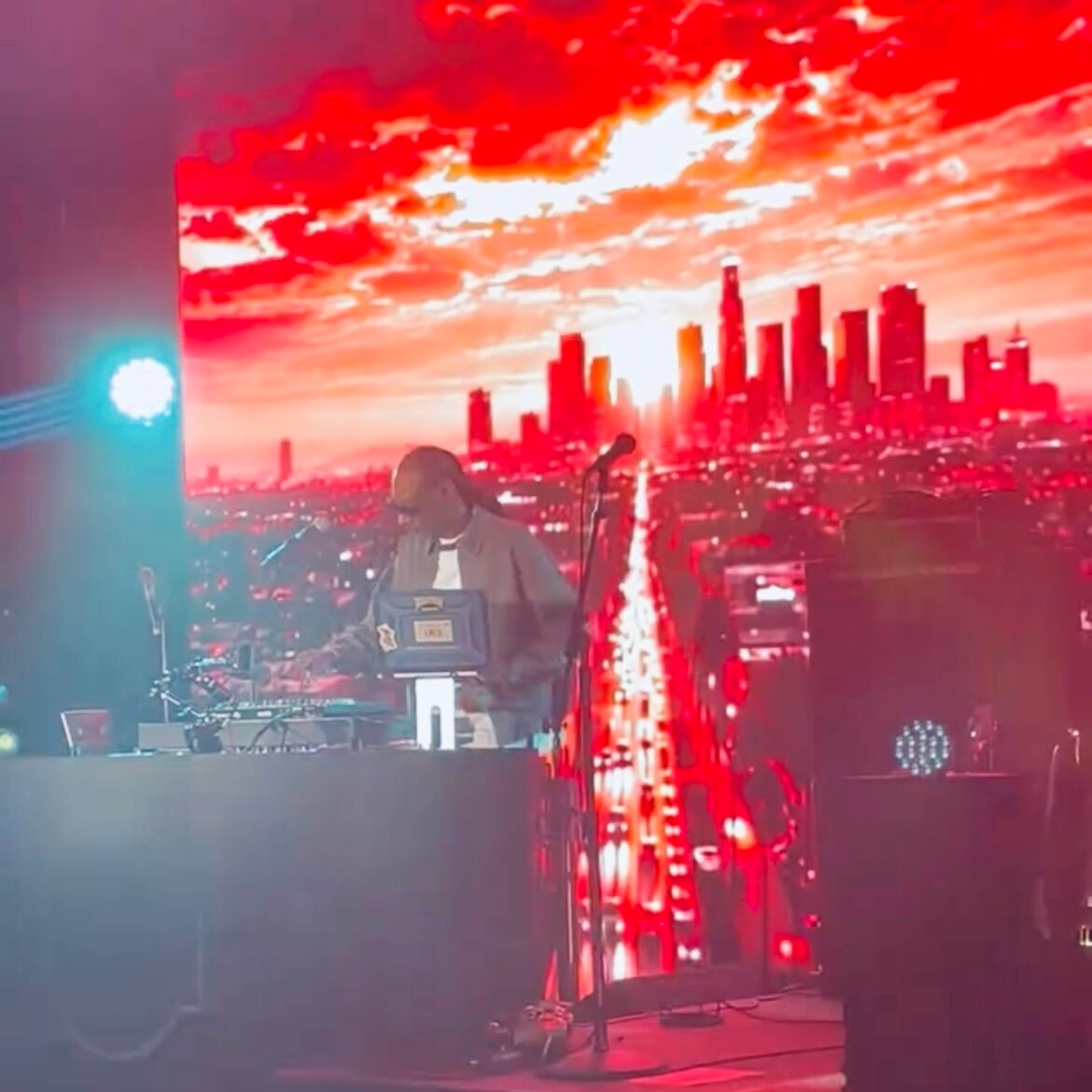
Thanks to Ramos and Snoop’s team, we were able to introduce the children to this world. We are not strangers to the behind-the-scenes side of entertainment, either: my husband works in television, in close contact with leading artists, while I have always interviewed international artists, singers, rappers, musicians and actors for mainstream media. The children have grown up around our projects, between concerts, exhibitions and encounters.
But attending an evening with Snoop Dogg, in Los Angeles, at his own home, was still something else entirely. For them, he is also the character from the video game Fortnite, recognisable by his signature dance. Seeing him in his own world, in the middle of such a generous celebration, felt almost surreal. And in the United States, everything seems to take on a different scale: the music, the guests, the staging, the food, the energy. An evening that would already have been extraordinary in France took on an almost unreal dimension here.
Los Angeles Without a Car
I have been travelling without a car for more than thirty years.
In Los Angeles, that can seem almost incongruous. So we mainly used public transport, except when friends drove us. It requires a little organisation, particularly when you want to travel from the ocean to Downtown, then on to Westwood or another neighbourhood.
The distances are considerable, and traffic can turn an ordinary journey into a full-scale expedition. But this way of getting around also allowed me to see another Los Angeles.

I often felt that I observed the neighbourhoods, the people and the changing scenery more closely than I would have done while crossing the city by car. I even met residents who did not always realise that some of the places we visited could be reached by public transport.
That amused me greatly. For more than thirty years, people have asked me how I manage without a car. Los Angeles simply confirmed something I already knew: it is possible, provided you accept that you cannot do everything quickly.
For a city that already forces you to contend with its distances, that may be a valuable lesson.
Los Angeles is like that. It keeps moving the scenery. You think you have figured the city out, and then it takes you somewhere else. That is what I eventually learned to accept, and perhaps even to love.
Where to Stay
Château Marmont, West Hollywood
Behind its ivy-covered walls, Château Marmont retains the atmosphere of a mythical Hollywood. Its bungalows, gardens and corridors still seem to hold fragments of legendary nights.
A guesthouse with a residential feel, far removed from the standardised atmosphere and anonymity of conventional hotels. Clean lines, natural materials and an intimate atmosphere create a peaceful retreat.
The Kinney Venice Beach, Venice
Just a few streets from the ocean, The Kinney combines bold colours, graphic lines and a distinctly Californian spirit. Its rooftop pool invites you to slow down between walks around the neighbourhood. A trendy yet relaxed hotel.
The Most Memorable Food Stops
Café Gratitude
Plant-based cuisine unfolds in a bright atmosphere, with colourful plates and carefully selected ingredients. The menu, punctuated by positive affirmations, extends the restaurant’s wellness philosophy into every detail.
Café Leon Dore, Melrose
Aimé Leon Dore’s café extends the brand’s world into a Mediterranean villa-inspired setting. Olive trees, gardens and architecture create a space where fashion and lifestyle meet.
The Win~Dow, Venice
A window onto simple, precise cooking, from soft burgers to crisp fries. The place feels rooted in everyday Venice, among residents, passers-by and regular beachgoers.
Erewhon
Erewhon turns grocery shopping into an aesthetic experience, with carefully selected products and sophisticated drinks. It embodies a particular vision of Californian wellness, both luxurious and meticulously staged.
Gjelina, Venice
On Abbot Kinney, Gjelina remains an emblematic example of the kind of Californian cuisine that celebrates vegetables, fire and sharing. A lively, generous restaurant, perfectly attuned to the energy of Venice.
Sous Sous, Venice
A more discreet address, where careful cooking meets an atmosphere free from unnecessary display. Here, the details matter more than the staging.
Destroyer, Culver City
In a minimalist setting, Destroyer blurs the boundaries between café, laboratory and restaurant. Each dish explores textures, temperatures and details with almost architectural precision.
San Damián, Downtown Los Angeles
A Peruvian restaurant where colour, texture and multiple influences come together. A place that contributes to a Los Angeles where cultures meet without ever completely blending into one another.
Dan Tana’s, West Hollywood
Behind its discreet façade, time seems to have stopped somewhere between Hollywood and Italian-American dolce vita. White tablecloths, traditional service and the atmosphere of an old institution offer another side of the city.
Catch LA, West Hollywood
Catch LA belongs to the Los Angeles of evenings, terraces and lights that linger late into the night. An address as attentive to its setting as it is to what arrives on the plate.
Wandering Differently
Sunset Junction, Silver Lake
At Sunset Junction, Los Angeles takes on the air of a village, with its cafés, small shops and lively terraces. A neighbourhood to explore without a precise route, allowing the façades to guide you.
York Boulevard, Highland Park
York Boulevard offers a more local side of Los Angeles, with independent businesses, historic buildings and newer addresses. A street where you feel everyday life more strongly than the spectacle of the city.
Sawtelle Japantown
Sawtelle is another neighbourhood where Japanese culture comes through in its restaurants, grocery shops and boutiques. You move from a ramen counter to a pastry shop, from a bookshop to a design store.
The Grove
The Grove fully embraces its film-set quality: immaculate streets, a tram, fountains and shops. An almost unreal promenade, yet a fascinating reflection of the Californian dream.
The Row DTLA
In its former industrial buildings, The Row DTLA brings together brickwork, design, restaurants and independent creators. A more raw version of Downtown, where the architecture still retains the memory of what the neighbourhood once was.
Doors Worth Opening
The Broad
With its honeycomb façade, The Broad makes a sculptural statement in the heart of Downtown. Inside, contemporary art engages with bright, spectacular architecture.
TCL Chinese Theatre
On Hollywood Boulevard, the TCL Chinese Theatre retains something of the dream of cinema, with its stars’ handprints and theatrical setting. A journey into a Hollywood memory that has become almost unreal.
Maxfield, Melrose
Maxfield is unlike an ordinary shop: fashion meets art, design and collectible objects. A radical address where shopping takes on the character of a cultural visit.
Bazar, Venice
Bazar reveals itself on a quieter street in Venice. Fashion, jewellery, accessories, apothecary objects and furniture come together in an eclectic selection. A shop with a free-spirited, unexpected Californian sensibility.
Aimé Leon Dore, Melrose
At Aimé Leon Dore, the shop extends into a café and garden inspired by a Mediterranean villa. Everything is conceived as a way of life, from the clothes to the architecture.
Fast Times, Melrose
Behind Buck Mason, Fast Times brings together a café, bookshop, gallery and design objects. Art books, ceramics and contemporary furniture reveal themselves as you move through the shelves.
A Few Detours
Getty Villa, Pacific Palisades
A reconstructed Roman villa overlooking the Pacific, gardens and ancient collections: the Getty Villa seems to belong to another continent. An improbable meeting between the ancient Mediterranean and Californian light.
Palm Springs
Palm Springs is a retreat of modernist lines, palm trees and desert mountains. A city where 1950s architecture continues to engage in conversation with the landscape.
Catalina Island, Avalon
A hint of the Mediterranean, pastel-coloured houses and a harbour where boats seem to form part of the scenery. Avalon offers a surprisingly transporting island escape, just a short distance from Los Angeles.
Santa Barbara
Spanish architecture, lush gardens and that particular light that envelops the Californian coast. Santa Barbara possesses a quiet elegance, with galleries, boutiques and terraces opening onto the ocean.
Joshua Tree National Park
The desert of Joshua Tree creates an abstract landscape, sculpted by rocks and Joshua trees. The light transforms its shapes throughout the day. A detour for reconnecting with a more rugged, expansive and contemplative California.
Maison Chill Experience
Lunch with your feet in the sand at Paradise Cove
At Malibu’s Paradise Cove Beach Café, the setting is part of the meal. Settle in facing the Pacific, directly on the sand, for an unfussy lunch, then extend the moment with a walk along the beach. Stay until late afternoon, when the light softens, the colours deepen and the ocean takes centre stage.